

The Future of Floating Solar: An Introduction
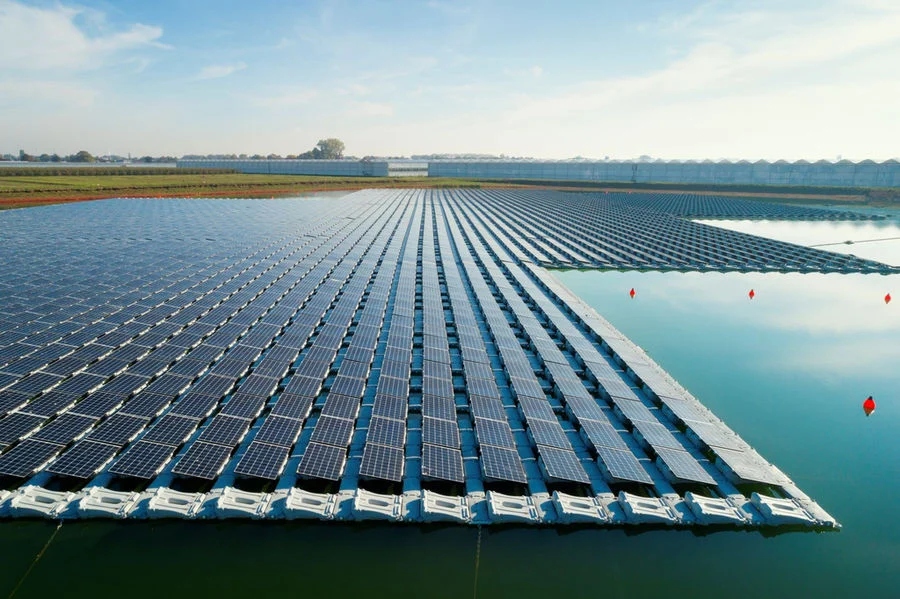
Floating solar is revolutionizing the renewable energy landscape in India. As the nation strives to meet its ambitious solar energy targets, utilizing our abundant water bodies with floating solar technology presents a unique solution. In this blog, we will explore the advancements in TOPCon solar technology and how it can lead to efficient energy production from India’s lakes, reservoirs, and canals.
What is Floating Solar?
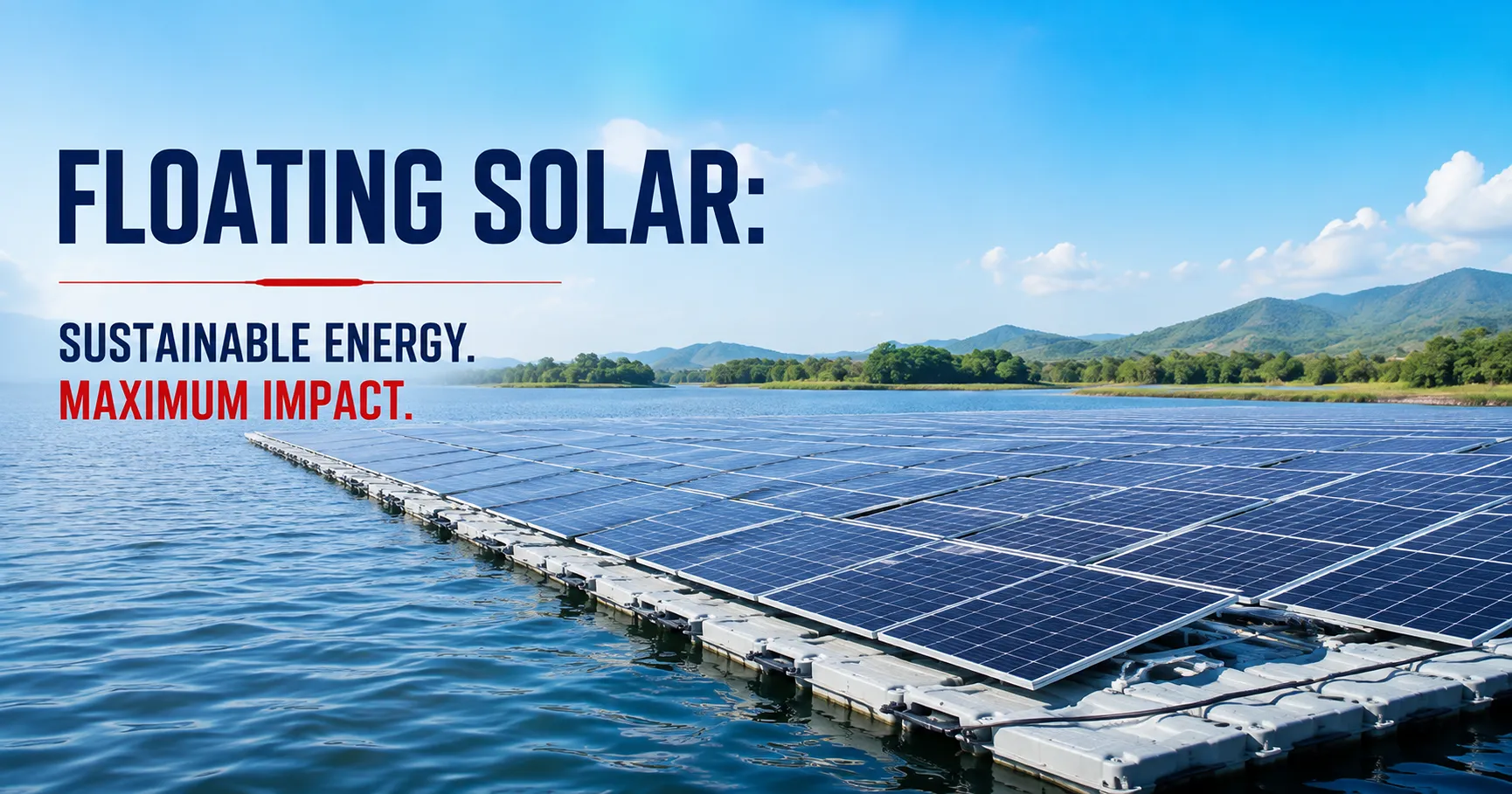
Floating solar refers to solar panels installed on water bodies, helping to harness solar energy while minimizing land use. These systems provide numerous benefits such as reduced evaporation, enhanced panel efficiency due to cooling effects, and minimal ecological disruption. At Frontier Energies, we have found that floating solar can significantly contribute to India’s renewable energy goals.
Why TOPCon Technology is a Game-Changer for Floating Solar?
TOPCon (Tunnel Oxide Passivated Contact) technology enhances solar panel efficiency significantly compared to traditional PERC (Passivated Emitter Rear Cell) panels. For instance, while PERC panels typically offer efficiency up to 22%, TOPCon panels can deliver up to 23.51% efficiency, as seen in our Stellar Series. This means more energy generation from the same area, crucial for floating installations where space is limited.
“The integration of TOPCon technology in floating solar solutions can lead to unprecedented efficiency and energy generation, positioning India as a leader in renewable energy.”
Current Trends and Government Initiatives
The Indian government has set a target of achieving 300 GW of solar capacity by 2022, with a significant emphasis on sustainable solutions like floating solar. Programs such as the “National Solar Mission” provide support for projects that innovate in the renewable sector. As per the Ministry of New and Renewable Energy (MNRE), floating solar projects are expected to harness over 10,000 MW from India’s water bodies.
Benefits of Floating Solar in India
- Space Efficiency: Floating solar panels require less land, making them ideal for densely populated regions.
- Environmental Impact: These systems can reduce water evaporation and improve water quality.
- Energy Production: Enhanced cooling effects lead to higher energy yields, maximizing ROI.
- Job Creation: The development and maintenance of these projects will create numerous jobs in the renewable sector.
How to Implement Floating Solar Projects?
- Assess suitable water bodies for floating solar installations.
- Engage with stakeholders including local governments and environmental agencies.
- Utilize advanced technologies like TOPCon for optimal efficiency.
- Secure financing through government schemes and private investments.
- Monitor and maintain the installations for long-term performance.
Conclusion: Embrace the Future with Frontier Energies
As India looks to harness its natural resources for sustainable energy, floating solar technology presents an exciting opportunity. With our state-of-the-art TOPCon bifacial solar panels, including the Phoenix, Stellar, and Fornax series, Frontier Energies is poised to lead the way in this innovative energy solution. Together, we can transform India’s water bodies into powerful sources of renewable energy, ensuring a greener future for generations to come.