



 Powering Energy Transition
What We Offer Powering Progress with Innovation and Expertise We provide advanced solar products, seamless installation services, and tailor-made energy solutions that cater to industrial, commercial, and institutional sectors.
What We Offer Powering Progress with Innovation and Expertise We provide advanced solar products, seamless installation services, and tailor-made energy solutions that cater to industrial, commercial, and institutional sectors.
-
 6 Series
- 615 - 645
Wp - TOPCon
- Bi-Facial
- Dual Glass
- 156Cells
- 0~+4.99WPower Tolerance
- 23.07%Efficiancy upto
The Phoenix Series represents our flagship product line, delivering exceptional power output of 615-645Wp through advanced N-TYPE TOPCON BIFACIAL technology. These modules are engineered for utility-scale installations, large commercial projects, and applications where maximum power density is critical for project economics.
- 615 - 645
-
 5 Series
- 570 - 600
Wp - TOPCon
- Bi-Facial
- Dual Glass
- 144Cells
- 0~+4.99 WPower Tolerance
- 23.23%Efficiancy upto
The Fornax Series offers an optimal balance of power output, efficiency, and value, making it ideal for commercial and industrial applications. With power ratings from 540-600Wp, these modules provide excellent performance for medium to large-scale installations.
- 570 - 600
-
 6 Series
- 610 - 635
Wp - TOPCon
- G12R
- Dual Glass
- 132Cells
- 0~+4.99 WPower Tolerance
- 23.51%Efficiancy upto
The Stellar Series delivers next-generation performance with 610–635 Wp power output using advanced N-Type TOPCon bifacial technology and 132 cells. Engineered for utility-scale and large commercial projects, it ensures superior efficiency, high reliability, and maximum energy yield for optimized land use and long-term returns.
- 610 - 635
-
6 Series
- 615 - 645
Wp - TOPCon
- Bi-Facial
- Dual Glass
- 156Cells
- 0~+4.99WPower Tolerance
- 23.07%Efficiancy upto
The Phoenix Series represents our flagship product line, delivering exceptional power output of 615-645Wp through advanced N-TYPE TOPCON BIFACIAL technology. These modules are engineered for utility-scale installations, large commercial projects, and applications where maximum power density is critical for project economics.
- 615 - 645
-
5 Series
- 570 - 600
Wp - TOPCon
- Bi-Facial
- Dual Glass
- 144Cells
- 0~+4.99 WPower Tolerance
- 23.23%Efficiancy upto
The Fornax Series offers an optimal balance of power output, efficiency, and value, making it ideal for commercial and industrial applications. With power ratings from 540-600Wp, these modules provide excellent performance for medium to large-scale installations.
- 570 - 600
-
6 Series
- 610 - 635
Wp - TOPCon
- G12R
- Dual Glass
- 132Cells
- 0~+4.99 WPower Tolerance
- 23.51%Efficiancy upto
The Stellar Series delivers next-generation performance with 610–635 Wp power output using advanced N-Type TOPCon bifacial technology and 132 cells. Engineered for utility-scale and large commercial projects, it ensures superior efficiency, high reliability, and maximum energy yield for optimized land use and long-term returns.
- 610 - 635
Why Choose Us? At Frontier Energies Private Limited, we are driven by a singular mission: To accelerate the world’s transition to sustainable energy by advancing solar manufacturing and energy infrastructure across India and beyond.
We are not just solar manufacturers — we are energy futurists, driven by the belief that control over energy and its infrastructure shapes civilization. From high-efficiency module innovation to scalable next-generation systems, we operate with scientific precision, operational excellence, and a bold vision for the future.
-
SustainabilityBy choosing Frontier Energies, you’re not just investing in solar panels; you’re investing in a sustainable future.
-
InnovationWe are constantly pushing the boundaries of technology to develop cutting-edge solar solutions.
-
Quality and ReliabilityOur solar panels are rigorously tested to ensure they meet the highest standards of quality and durability.
-
Customer Focus Your satisfaction is our top priority. We offer personalized support and expert guidance every step of the way.
Why Choose Us? At Frontier Energies Private Limited, we are driven by a singular mission: To accelerate the world’s transition to sustainable energy by advancing solar manufacturing and energy infrastructure across India and beyond.
We are not just solar manufacturers — we are energy futurists, driven by the belief that control over energy and its infrastructure shapes civilization. From high-efficiency module innovation to scalable next-generation systems, we operate with scientific precision, operational excellence, and a bold vision for the future.
-
SustainabilityBy choosing Frontier Energies, you’re not just investing in solar panels; you’re investing in a sustainable future.
-
InnovationWe are constantly pushing the boundaries of technology to develop cutting-edge solar solutions.
-
Quality and ReliabilityOur solar panels are rigorously tested to ensure they meet the highest standards of quality and durability.
-
Customer Focus Your satisfaction is our top priority. We offer personalized support and expert guidance every step of the way.
Partner with us because we’re not just solar manufacturers — we’re energy futurists shaping the future of power. We believe control over energy and its infrastructure is the foundation of all progress. With a relentless drive for innovation, we pioneer high-efficiency solar modules and next-generation energy systems at scale.
Our partnerships are built on scientific precision, operational excellence, and a long-term vision for sustainable growth. Together, we can unlock new opportunities, expand your market reach, and lead the transition toward a cleaner, more profitable energy future.
- Contact us today
- 08044186767
- Write to us
Partner with us because we’re not just solar manufacturers — we’re energy futurists shaping the future of power. We believe control over energy and its infrastructure is the foundation of all progress. With a relentless drive for innovation, we pioneer high-efficiency solar modules and next-generation energy systems at scale.
Our partnerships are built on scientific precision, operational excellence, and a long-term vision for sustainable growth. Together, we can unlock new opportunities, expand your market reach, and lead the transition toward a cleaner, more profitable energy future.
-
Please Wait
Videos are Loading... -
Please Wait
Videos are Loading... -
Please Wait
Videos are Loading... -
Please Wait
Videos are Loading...
-
Please Wait
Videos are Loading... -
Please Wait
Videos are Loading...
-
Please Wait
Videos are Loading... -
Please Wait
Videos are Loading... -
Please Wait
Videos are Loading... -
Please Wait
Videos are Loading...
Sectors Industries We Serve We power diverse sectors with high-efficiency solar solutions designed for performance, reliability, and long-term savings. From industrial and commercial facilities to residential, agricultural, and institutional projects, our solar technology adapts to every energy need — driving sustainability and profitability across industries.
ManufacturingCut energy costs and boost efficiency with our powerful solar solutions.
RetailEnhance your brand’s sustainability profile and attract eco-conscious customers.
CommercialIncrease property value and appeal to tenants with sustainable energy solutions.
AgriculturePower your farming operations with clean, renewable energy.
Sectors Industries We Serve We power diverse sectors with high-efficiency solar solutions designed for performance, reliability, and long-term savings. From industrial and commercial facilities to residential, agricultural, and institutional projects, our solar technology adapts to every energy need — driving sustainability and profitability across industries.
ManufacturingCut energy costs and boost efficiency with our powerful solar solutions.
RetailEnhance your brand’s sustainability profile and attract eco-conscious customers.
CommercialIncrease property value and appeal to tenants with sustainable energy solutions.
AgriculturePower your farming operations with clean, renewable energy.
Sectors Industries We Serve We power diverse sectors with high-efficiency solar solutions designed for performance, reliability, and long-term savings. From industrial and commercial facilities to residential, agricultural, and institutional projects, our solar technology adapts to every energy need — driving sustainability and profitability across industries.
ManufacturingCut energy costs and boost efficiency with our powerful solar solutions.
RetailEnhance your brand’s sustainability profile and attract eco-conscious customers.
CommercialIncrease property value and appeal to tenants with sustainable energy solutions.
AgriculturePower your farming operations with clean, renewable energy.
 ALMM Approved
 ISO Compliant
 BIS Standard Compliant
 Conformité Européenne
 EU-28 WEEE Compliant
 Recyclable Packaging
ALMM Approved
ISO Compliant
BIS Standard Compliant
Conformité Européenne
EU-28 WEEE Compliant
Recyclable Packaging
Recyclable Packaging
ALMM Approved
ISO Compliant
BIS Standard Compliant
Conformité Européenne
EU-28 WEEE Compliant
Recyclable Packaging
Updates Blogs & News
When Defects Become the Difference: Understanding Ring Defects in TOPCon Solar Cells
The next generation of high-efficiency solar technology is not only about improving the solar-cell architecture. It is also about understanding and controlling the microscopic defects that can limit performance.
A recent open-access study published in Communications Materials on 15 July 2026 investigates one such challenge: the formation of ring-like defects in low-oxygen Czochralski (Cz) silicon used for TOPCon solar cells. The research provides new evidence that variations in oxygen and intrinsic point defects across the silicon wafer can trigger oxygen precipitation, creating regions that appear as rings in photoluminescence imaging.
For the TOPCon industry, this is an important finding because it connects crystal growth and wafer quality directly to solar-cell performance and manufacturing yield.
Why silicon wafer quality matters in TOPCon
TOPCon, or Tunnel Oxide Passivated Contact, has become an important platform for high-efficiency crystalline-silicon solar cells.
The technology relies on carefully engineered interfaces and high-quality silicon wafers. While attention often focuses on the tunnel oxide, poly-Si contact, metallization and passivation layers, the quality of the underlying silicon wafer is equally important.
Defects already present in the wafer can become performance-limiting centres during subsequent thermal and cell-processing steps.
This is where Czochralski silicon, commonly known as Cz silicon, becomes particularly important.
Cz silicon is produced by pulling a single-crystal silicon ingot from molten silicon. During crystal growth and cooling, oxygen and intrinsic point defects can become incorporated into the material.
Controlling their concentration and distribution is therefore critical.
What are the “ring defects”?
If you look at a photoluminescence image of a silicon wafer, some wafers can show distinctive ring-like patterns, particularly toward the wafer edge.
These patterns are not simply visual anomalies.
They can indicate areas where the silicon's defect and oxygen chemistry differs from the surrounding wafer.
The new study shows that these rings are associated with regions where interstitial oxygen and intrinsic point defects are distributed non-uniformly across the wafer. In particular, the researchers found that conditions near the wafer edge can fall within a critical range that accelerates oxygen precipitation.
The result is a region with a higher density of oxygen precipitates, which appears as multiple rings in photoluminescence images.
The role of oxygen precipitation
Oxygen is naturally incorporated into Cz silicon during crystal growth.
Under certain thermal conditions, oxygen atoms can cluster and form oxygen precipitates (OPs).
Oxygen precipitation is not necessarily undesirable in every semiconductor application. However, in high-efficiency solar cells, uncontrolled precipitation can contribute to defects that affect carrier lifetime and electrical performance.
The 2026 study is particularly interesting because it shows that under low-oxygen conditions, the formation of ring defects can still occur.
The critical factor is not simply whether the wafer has “high” or “low” oxygen concentration.
Instead, the local combination of oxygen concentration and intrinsic point defects can create conditions favourable for rapid oxygen precipitation.
This is an important distinction for industrial wafer engineering.
Point defects: the hidden factor
The study focuses heavily on intrinsic point defects within silicon.
These defects include deviations from the ideal silicon crystal lattice, such as vacancies and self-interstitial-related defects.
Although they exist at extremely small scales, they can influence how oxygen behaves inside the silicon.
The researchers found evidence that when point-defect concentrations and oxygen levels fall within a particular critical range, oxygen precipitation kinetics can accelerate.
This effect is particularly important near the wafer edge, where radial variations in material properties can occur.
In other words:
A small variation in crystal chemistry → changes oxygen precipitation → creates defect-rich regions → affects solar-cell performance.
That chain is important for understanding manufacturing yield.
How did the researchers identify the mechanism?
One of the strengths of this research is that the authors did not rely on a single measurement technique.
They combined several analytical approaches, including:
- Fourier-transform infrared spectroscopy (FTIR)
- Positron annihilation lifetime spectroscopy (PALS)
- Preferential etching
- Controlled annealing experiments
- Photoluminescence imaging
Together, these methods allowed the researchers to connect the observed ring patterns with variations in oxygen and point-defect behaviour.
This combination of techniques provides experimental evidence supporting the role of point defects in ring formation under low-oxygen conditions.
Why the wafer edge is important
The study highlights an important manufacturing challenge.
A silicon wafer may appear relatively uniform when considered at a large scale, but its material properties can vary radially from the centre toward the edge.
These variations can influence:
- Oxygen concentration
- Point-defect populations
- Oxygen precipitation
- Defect density
- Carrier lifetime
- Solar-cell electrical performance
If the edge region becomes more susceptible to defect formation, the result can be a non-uniform wafer that ultimately affects downstream cell processing.
For manufacturers, this makes crystal-growth control an important part of the TOPCon efficiency equation.
From crystal growth to manufacturing yield
This is where the research becomes particularly relevant to industrial solar manufacturing.
A high-efficiency solar cell is not created in one step.
The manufacturing chain can be viewed as:
Silicon purification
↓
Crystal growth
↓
Wafer slicing
↓
Wafer cleaning and texturing
↓
TOPCon passivation and contact formation
↓
Metallization
↓
Cell testing
↓
Module manufacturing
A defect originating during crystal growth can therefore remain hidden until much later in the production process.
If those defects reduce cell performance or create non-uniformity, they can affect manufacturing yield and increase the cost of producing high-efficiency cells.
The new research provides a stronger scientific basis for tackling the problem earlier—at the crystal and wafer stage.
What can the industry learn from this research?
The study points toward several important areas for continued development.
1. Better control of crystal growth
Optimizing thermal conditions and crystal-growth parameters can help control oxygen and intrinsic point-defect distributions.
2. More detailed wafer characterization
Photoluminescence imaging and complementary material-characterization methods can help identify problematic wafers before they proceed through expensive cell-processing steps.
3. Understanding low-oxygen silicon
The research shows that reducing oxygen concentration alone does not necessarily eliminate ring defects. The interaction between oxygen and point defects must also be considered.
4. Improving manufacturing yield
Identifying the origin of ring defects provides manufacturers with another pathway to reduce defective areas and improve the consistency of high-efficiency TOPCon production.
Why this matters for TOPCon
TOPCon is already a mature industrial technology, but pushing efficiency higher requires increasingly precise control over every source of loss.
As surface passivation and contact technologies improve, bulk silicon quality becomes even more important.
Imagine improving the cell architecture to reduce recombination, only to have material defects in the wafer limit carrier lifetime.
This is why the future of TOPCon cannot be separated from advances in:
Crystal growth + wafer quality + defect engineering + passivation + contact technology
All of these components need to work together.
Connecting the research to Frontier Energies
At Frontier Energies, our focus is on high-efficiency N-type TOPCon bifacial solar modules designed for real-world commercial, industrial and utility-scale applications.
Our portfolio includes the Phoenix, Fornax and Stellar series, reflecting the industry's continued transition toward higher-power N-type TOPCon technology. Frontier Energies
Research such as this Communications Materials study is valuable to the wider TOPCon ecosystem because it demonstrates that achieving reliable high efficiency begins well before the solar cell reaches the production line.
It begins with the quality and consistency of the silicon wafer itself.
For module manufacturers, this reinforces an important principle: high-performance solar modules depend on a chain of quality extending from silicon crystal growth all the way to module assembly and field deployment.
Frontier Energies' commercial TOPCon modules represent the downstream application of this broader technology ecosystem. The research discussed here is not a Frontier Energies research result, but it provides useful insight into one of the upstream factors that can influence the performance and consistency of TOPCon cells.
The Bigger Picture: Efficiency Is Also About Consistency
The solar industry often celebrates record efficiency numbers.
But industrial photovoltaics require something more:
High efficiency must be repeatable.
A single high-performing laboratory cell is impressive. Producing millions of cells with consistently high performance is a much greater engineering challenge.
That is why defect control, wafer uniformity and manufacturing yield are becoming increasingly important as TOPCon production scales.
A reduction in defect-related losses can potentially mean:
Better wafer quality → more consistent cells → higher manufacturing yield → more reliable module production.
This is the pathway from materials science to industrial-scale solar.
Conclusion
The 2026 Communications Materials study offers an important new perspective on ring defects in low-oxygen Cz silicon used for TOPCon solar cells.
The researchers found that radial variations in interstitial oxygen and intrinsic point defects can accelerate oxygen precipitation near wafer edges, producing regions of high oxygen-precipitate density that appear as ring patterns in photoluminescence imaging.
The significance goes beyond understanding a defect pattern.
The research demonstrates how crystal-growth conditions, wafer chemistry and solar-cell performance are closely connected.
As TOPCon technology continues to move toward higher efficiency and larger-scale manufacturing, controlling these microscopic sources of variation could become increasingly important for achieving consistent performance and strong manufacturing yield.
For the solar industry, the message is clear:
The path to higher-efficiency TOPCon does not begin only at the cell. It begins with the silicon crystal.
And as companies such as Frontier Energies continue to advance high-efficiency N-type TOPCon solutions, developments in silicon materials science will remain an important part of the technology journey toward more productive and reliable solar energy.
Research Reference
Li, G., Yuan, S., Han, W. et al. “Point defect-dominated ring defect formation limiting TOPCon solar cell performance in low-oxygen Cz Silicon.” Communications Materials (2026). Published 15 July 2026. DOI: 10.1038/s43246-026-01283-x. The article is open access under a CC BY-NC-ND 4.0 licence.
- August 18, 2026
- Blogs
The race to improve crystalline-silicon solar efficiency is increasingly moving into the microscopic world of interfaces, defects and materials engineering.
A new study published in ACS Applied Materials & Interfaces on 25 May 2026 presents an interesting approach to improving the performance of Tunnel Oxide Passivated Contact (TOPCon) solar cells. The researchers developed a TOPCon structure combining an ultrathin silicon oxide layer produced using N₂O plasma oxidation with carbon-incorporated polycrystalline silicon (poly-Si).
The results demonstrate how carefully engineered materials at the silicon/contact interface can reduce recombination while maintaining the electrical properties required for efficient carrier collection.
For the solar industry, this is an important direction for the continued evolution of TOPCon technology.
Why Passivation Is Critical in TOPCon
TOPCon has become one of the leading technologies for high-efficiency crystalline-silicon photovoltaics.
The basic concept is relatively simple: an ultrathin oxide layer sits between the crystalline silicon wafer and a doped poly-Si contact. This structure helps passivate the silicon surface while enabling charge carriers to reach the electrical contact.
But achieving the right balance is challenging.
A good TOPCon contact needs to provide:
- Excellent surface passivation
- Low recombination
- Efficient carrier transport
- Low contact resistance
- Thermal stability
- Compatibility with industrial manufacturing
Improving one property can sometimes negatively affect another. The 2026 ACS study addresses this challenge by combining chemical passivation and electric-field-effect passivation through coordinated oxide and poly-Si engineering.
The Role of N₂O Plasma Oxidation
One of the key innovations in the study is the use of N₂O plasma oxidation to create the ultrathin silicon oxide layer.
According to the researchers, this process produces a uniform, continuous and amorphous SiOₓ layer.
Why is that important?
The silicon/oxide interface contains defects that can act as recombination centres. These defects can allow photogenerated carriers to disappear before they contribute to useful electrical current.
Better interface quality means fewer recombination losses.
The N₂O-plasma approach therefore focuses on improving the quality of the oxide and the interface it creates with the silicon substrate.
Carbon-Engineered Poly-Silicon: A Second Piece of the Puzzle
The second major element of the research is the introduction of carbon into the polycrystalline silicon layer.
The researchers found that carbon incorporation can influence several properties of the poly-Si layer.
According to the study, carbon:
- Suppresses excessive poly-Si crystallization
- Promotes hydrogen accumulation at the SiOₓ/silicon interface
- Reduces the poly-Si work function
- Creates favourable energy-band bending
- Contributes to improved passivation
Together, these effects strengthen both chemical passivation and field-effect passivation.
This is particularly interesting because TOPCon performance is not controlled by a single material.
The oxide and poly-Si layers need to function as an integrated system.
A Synergy Between Chemistry and Electrical Fields
One of the most important concepts in this research is the combination of two passivation mechanisms.
Chemical passivation
The silicon oxide helps reduce electrically active defects at the silicon interface.
Field-effect passivation
The electrical properties of the poly-Si contact help repel minority carriers away from the interface, reducing the probability of recombination.
When these mechanisms work together, the interface can become significantly more effective at preventing carrier losses.
This is precisely the type of engineering required as TOPCon cells move toward increasingly high efficiency.
The Numbers Behind the Research
The optimized structure demonstrated impressive passivation characteristics.
The researchers reported:
760 mV implied open-circuit voltage (iVₒc)
0.5 fA/cm² recombination current density (J₀,s)
27.9 ms effective minority-carrier lifetime
These values indicate a highly effective passivated contact structure.
Importantly, the research did not stop at laboratory characterization.
The optimized structure was also tested in mass-produced, large-area TOPCon cells, where the researchers reported an absolute efficiency improvement of 0.05%.
That industrial validation is particularly significant.
A material innovation becomes much more valuable to the PV industry when it can survive the realities of large-scale manufacturing.
Why the 0.05% Improvement Matters
At first glance, a 0.05 percentage-point absolute efficiency gain may appear small.
In large-scale solar manufacturing, however, even small improvements can have substantial value when multiplied across millions of cells and thousands of modules.
Higher cell efficiency can contribute to:
More watts per module → higher power density → potentially fewer modules for a given project capacity → optimized balance-of-system costs.
This is one reason why modern solar R&D focuses so intensely on seemingly small improvements in recombination, resistance and optical losses.
The industry is no longer looking only for dramatic changes in cell architecture.
It is increasingly looking for small, repeatable improvements that can be scaled economically.
What This Means for the Future of TOPCon
The study highlights several important directions for TOPCon development.
1. Interface engineering will become increasingly important
As cell efficiencies rise, losses at interfaces become more significant. Better control of the Si/SiOₓ/poly-Si system can therefore provide another pathway to higher performance.
2. Material combinations matter
The study demonstrates that improving the oxide alone is not necessarily enough. The properties of the adjacent poly-Si layer also influence the overall passivation behaviour.
3. Thermal stability is essential
The optimized structure showed good tolerance to variations in annealing temperature and carbon content, which is valuable for industrial processing.
4. Laboratory results must translate to manufacturing
Perhaps most importantly, the researchers demonstrated an efficiency improvement in mass-produced large-area cells, connecting the material innovation to industrial applicability.
Connecting the Research to Frontier Energies
At Frontier Energies, our focus is on advanced N-type TOPCon solar technology and high-performance bifacial modules designed for real-world applications.
Our current portfolio includes the Phoenix, Fornax and Stellar series, covering commercial, industrial and utility-scale applications.
Frontier Energies' Phoenix Series, for example, uses N-type TOPCon bifacial technology and offers power ratings from 615–645 Wp, with module efficiency up to 23.07%. The series is positioned for utility-scale and large commercial projects where power density is important.
The Fornax Series provides 565–600 Wp TOPCon bifacial dual-glass modules, with efficiency up to 23.23%, targeting commercial and industrial applications.
The Stellar Series uses N-type TOPCon bifacial technology with G12R cells and reaches up to 635 Wp and 23.51% module efficiency, according to Frontier Energies' current specifications.
It is important to distinguish these commercial module specifications from the laboratory and cell-level metrics reported in the ACS research. The research focuses on the underlying TOPCon cell structure, while Frontier Energies' figures describe complete commercial modules.
From Materials Science to Megawatts
Research such as this illustrates how the next generation of solar efficiency may be achieved.
The future is unlikely to depend on one single breakthrough.
Instead, progress will come from optimizing multiple components simultaneously:
Better silicon surfaces
↓
Better oxide layers
↓
Better poly-Si contacts
↓
Lower recombination
↓
Better carrier collection
↓
Higher-efficiency solar cells
↓
Higher-power solar modules
The challenge is to achieve these improvements while keeping manufacturing scalable, reliable and cost-effective.
That is where industrial validation becomes so important.
The Bigger Picture for India's Solar Future
India's solar industry is moving toward higher-power modules, greater efficiency and increased domestic manufacturing capability.
As module technologies evolve, advanced N-type TOPCon architectures are becoming increasingly important for delivering higher energy output from available land and infrastructure.
Frontier Energies states that its mission is to accelerate the transition toward sustainable energy through advanced solar manufacturing and energy infrastructure, with a focus on innovation, scale and long-term performance.
Research into advanced TOPCon passivation supports the broader technological ecosystem behind this transition.
The work may look microscopic—an ultrathin oxide layer, carbon atoms within poly-Si and the behaviour of carriers at an interface.
But the potential impact is measured at a much larger scale.
From nanometres at the silicon interface to gigawatts of solar generation.
Conclusion
The 2026 ACS Applied Materials & Interfaces study demonstrates a compelling approach to improving TOPCon solar-cell passivation by combining N₂O-plasma-grown SiOₓ with carbon-incorporated poly-Si.
The optimized structure achieved an iVₒc of 760 mV, J₀,s of 0.5 fA/cm² and a 27.9 ms minority-carrier lifetime, while industrial validation delivered a 0.05% absolute efficiency gain in mass-produced large-area TOPCon cells.
The key message is clear:
The next gains in solar efficiency may come from controlling the smallest details of the cell.
For TOPCon, the silicon/oxide/poly-Si interface remains one of the most important areas for innovation.
As research continues to improve these interfaces, the pathway toward more efficient, reliable and scalable solar technology becomes increasingly promising.
For companies such as Frontier Energies, these developments reinforce the importance of advanced TOPCon technology as part of India's journey toward a higher-efficiency, more self-reliant and sustainable energy future.
Research Reference
Zunke Liu et al., “Nitrous Oxide-Plasma Silicon Oxide Coupled with Carbon-Incorporated Polycrystalline Silicon Enables Highly Passivated TOPCon Solar Cells,” ACS Applied Materials & Interfaces, 2026, 18(22), 31530–31541. DOI: 10.1021/acsami.6c06122.
- August 18, 2026
- Blogs
The Future of Floating Solar: Harnessing India’s Water Bodies
The Future of Floating Solar: An Introduction
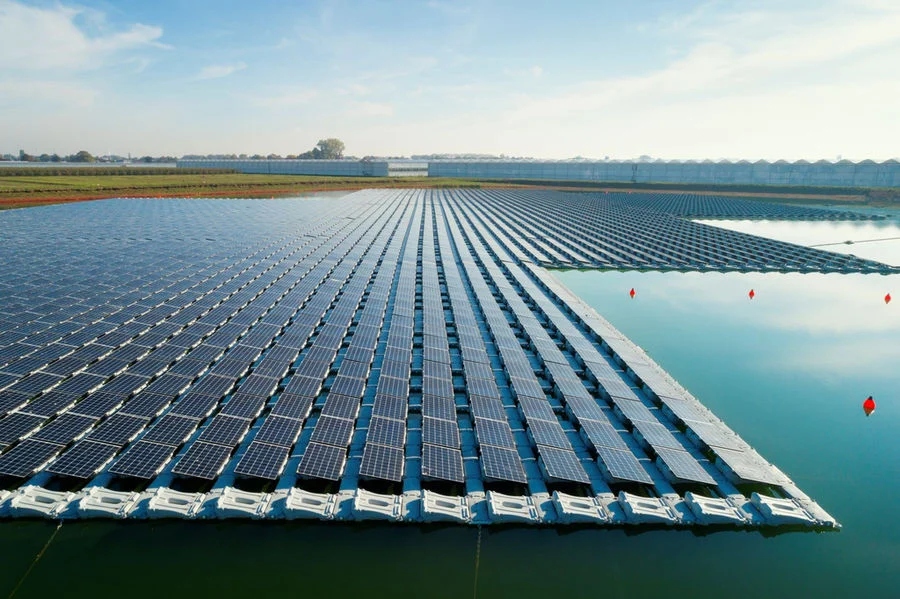
What is Floating Solar?
Floating solar refers to solar panels installed on water bodies, helping to harness solar energy while minimizing land use. These systems provide numerous benefits such as reduced evaporation, enhanced panel efficiency due to cooling effects, and minimal ecological disruption. At Frontier Energies, we have found that floating solar can significantly contribute to India's renewable energy goals.Why TOPCon Technology is a Game-Changer for Floating Solar?
TOPCon (Tunnel Oxide Passivated Contact) technology enhances solar panel efficiency significantly compared to traditional PERC (Passivated Emitter Rear Cell) panels. For instance, while PERC panels typically offer efficiency up to 22%, TOPCon panels can deliver up to 23.51% efficiency, as seen in our Stellar Series. This means more energy generation from the same area, crucial for floating installations where space is limited.“The integration of TOPCon technology in floating solar solutions can lead to unprecedented efficiency and energy generation, positioning India as a leader in renewable energy.”
Current Trends and Government Initiatives
The Indian government has set a target of achieving 300 GW of solar capacity by 2022, with a significant emphasis on sustainable solutions like floating solar. Programs such as the “National Solar Mission” provide support for projects that innovate in the renewable sector. As per the Ministry of New and Renewable Energy (MNRE), floating solar projects are expected to harness over 10,000 MW from India's water bodies.Benefits of Floating Solar in India
- Space Efficiency: Floating solar panels require less land, making them ideal for densely populated regions.
- Environmental Impact: These systems can reduce water evaporation and improve water quality.
- Energy Production: Enhanced cooling effects lead to higher energy yields, maximizing ROI.
- Job Creation: The development and maintenance of these projects will create numerous jobs in the renewable sector.
How to Implement Floating Solar Projects?
- Assess suitable water bodies for floating solar installations.
- Engage with stakeholders including local governments and environmental agencies.
- Utilize advanced technologies like TOPCon for optimal efficiency.
- Secure financing through government schemes and private investments.
- Monitor and maintain the installations for long-term performance.
Conclusion: Embrace the Future with Frontier Energies
As India looks to harness its natural resources for sustainable energy, floating solar technology presents an exciting opportunity. With our state-of-the-art TOPCon bifacial solar panels, including the Phoenix, Stellar, and Fornax series, Frontier Energies is poised to lead the way in this innovative energy solution. Together, we can transform India's water bodies into powerful sources of renewable energy, ensuring a greener future for generations to come.- August 18, 2026
- Blogs
The Future of Rooftop Solar in India: Opportunities and Growth for Dealers
The Future of Rooftop Solar in India: Opportunities and Growth for Dealers
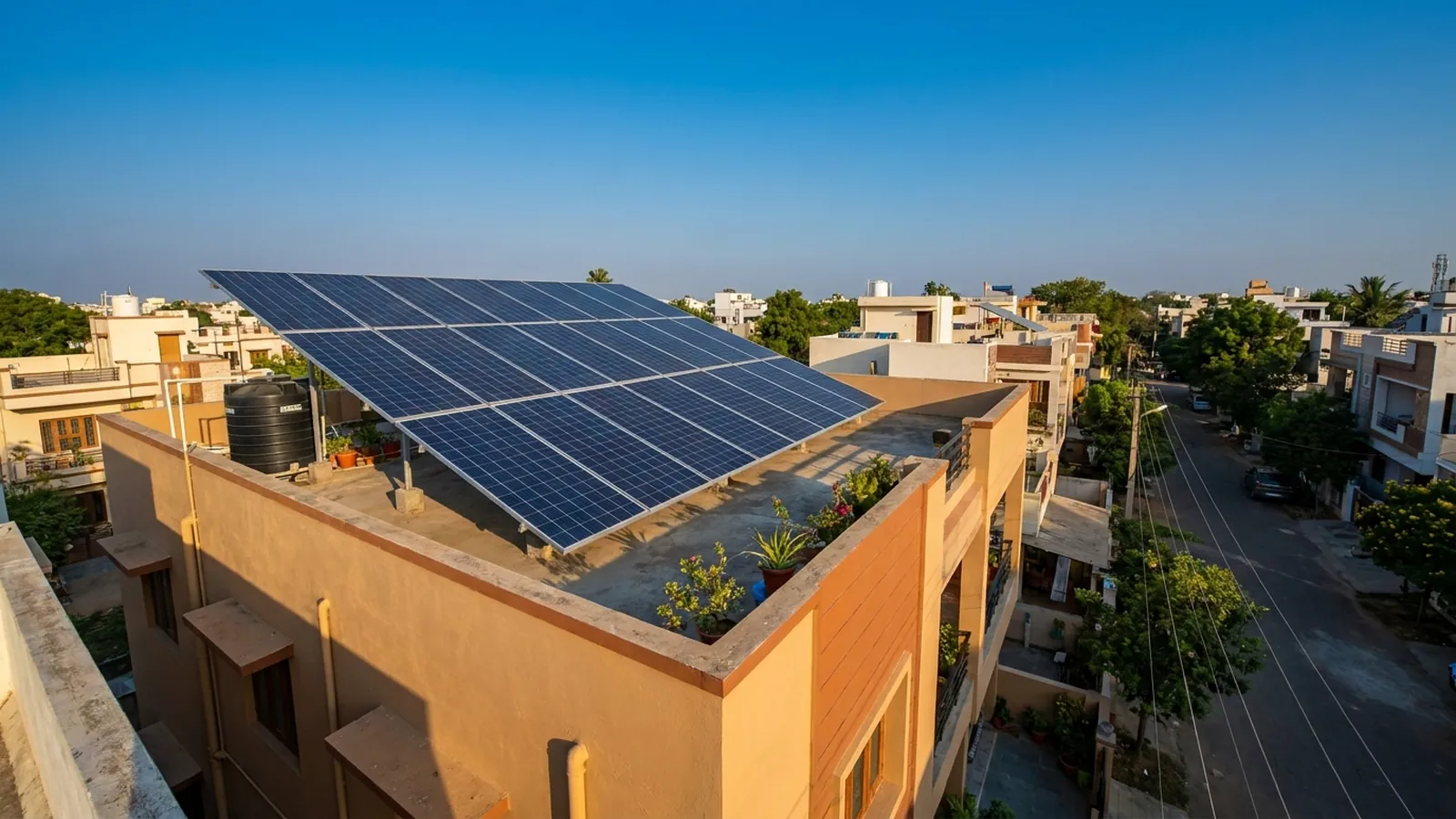
Why Rooftop Solar is Key to India's Energy Future
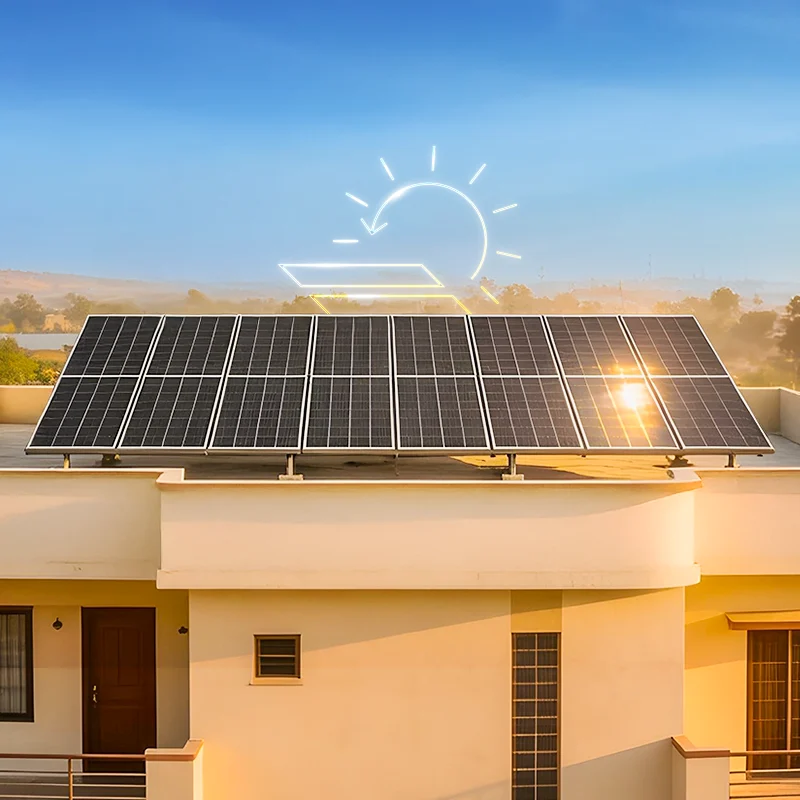
What Are the Key Opportunities for Dealers in 2026?
Dealers can benefit from various opportunities as the market for rooftop solar in India expands:- Government Incentives: The Indian government offers various subsidies and tax benefits to encourage rooftop solar adoption.
- Increasing Awareness: With more consumers recognizing the benefits of solar energy, demand for rooftop installations is set to rise.
- Technological Advancements: Innovations in solar technology, such as N-Type TOPCon bifacial panels, improve efficiency and appeal to customers.
- Partnership Opportunities: Collaborations with established solar manufacturers can provide dealers with a competitive edge.
How to Prepare for the Growth in Rooftop Solar?
To maximize potential growth, dealers should consider the following steps:- Invest in Training: Equip your team with knowledge about the latest solar technologies and market trends.
- Build Relationships: Establish connections with solar manufacturers like Frontier Energies for high-quality products.
- Understand the Market: Stay updated on government policies and consumer preferences to tailor your offerings accordingly.
What Government Schemes Support Rooftop Solar Growth?
One notable government initiative is the Grid Connected Rooftop Solar Scheme, which aims to promote solar installations on residential and commercial rooftops. Under this scheme, financial incentives are provided, making solar energy more accessible and affordable for consumers.Conclusion
The prospects for rooftop solar in India are promising, and dealers stand to gain immensely from this growth. As the market expands, Frontier Energies provides high-quality N-Type TOPCon bifacial solar panels, including our Phoenix, Stellar, and Fornax series. By leveraging the opportunities presented, dealers can thrive in this evolving landscape."The rooftop solar market in India is not just a trend; it's a necessity for sustainable growth. Dealers must prepare now to seize the future." - Industry Expert
- August 18, 2026
- Blogs
The Future of Solar Power in India: How TOPCon Enhances Efficiency
The Future of Solar Power in India: Enhancing Efficiency with TOPCon
As India strives towards its renewable energy targets, solar power has emerged as a cornerstone of its energy strategy. With the government's ambitious goal of achieving 280 GW of solar capacity by 2030, the adoption of innovative technologies like TOPCon technology is crucial. In this blog, we’ll explore how TOPCon enhances solar panel efficiency and sustainability, and what it means for India’s future energy landscape.What is TOPCon Technology?
TOPCon solar panels are a revolutionary advancement in photovoltaic technology. They utilize a tunnel-oxide passivated contact design that significantly reduces electron recombination, leading to higher energy conversion efficiency. This technology contrasts with traditional PERC panels, which typically achieve efficiencies around 21-22%. In comparison, TOPCon panels can reach efficiencies above 23%, offering better performance in both standard and low-light conditions.“The transition to advanced solar technologies like TOPCon is vital for meeting India's energy demands sustainably,” says an industry expert.
How Does TOPCon Technology Improve Efficiency?
TOPCon technology enhances efficiency by effectively managing how sunlight interacts with solar cells. By minimizing energy losses, it allows solar panels to generate more power from the same amount of sunlight. For instance, Frontier Energies' Phoenix Series offers up to 645Wp with a remarkable efficiency of 23.07%, while the Stellar Series achieves 23.51%. This means more energy production per square meter, crucial for optimizing solar installations across India.Benefits of TOPCon Technology for Sustainability
1. **Higher Energy Yield**: The increased efficiency of TOPCon panels leads to a significantly higher energy yield, reducing the land footprint required for solar farms. 2. **Longer Lifespan**: These panels are designed to last longer, contributing to a lower environmental impact over their operational lifetime. 3. **Reduced Carbon Footprint**: By generating more electricity with less space and materials, TOPCon technology helps in reducing the overall carbon footprint associated with solar energy production.Government Support and Market Trends
The Indian government has introduced several initiatives to promote solar energy, including the Solar Rooftop Scheme, which offers financial incentives for residential and commercial installations. With a target of installing 40 GW of rooftop solar by 2022, the push for solar energy is stronger than ever. According to the Ministry of New and Renewable Energy (MNRE), solar power accounted for about 45 GW of the total renewable energy capacity in India as of 2023.Is TOPCon Technology Worth the Investment?
Yes, investing in TOPCon technology is worthwhile. With the current trajectory of solar technology advancements, the ROI for TOPCon panels is increasingly favorable. Homeowners and businesses can expect lower electricity bills and greater energy independence. Additionally, with government subsidies and incentives, initial investment costs are becoming more manageable.Conclusion
At Frontier Energies, we have found that the future of solar power in India is bright, especially with the adoption of TOPCon technology. Our range of solar panels, including the Fornax Series, ensures you have access to the latest in solar efficiency. Embrace the future of energy with us.- August 18, 2026
- Blogs
The Future of Solar Energy in India: How TOPCon Technology is Driving Sustainable Growth
The Future of Solar Energy in India: How TOPCon Technology is Driving Sustainable Growth
At Frontier Energies, we have found that the future of solar energy in India is bright, thanks to advancements like TOPCon technology. With the government's ambitious target of achieving 450 GW of renewable energy capacity by 2030, the solar sector is poised for unprecedented growth. In this blog, we'll explore how TOPCon technology is revolutionizing solar energy, its efficiency benefits, and what it means for India's sustainable future.What is TOPCon Technology?
TOPCon solar panels are a cutting-edge solar technology that enhances the efficiency and performance of solar cells. By utilizing tunnel oxide passivated contact technology, TOPCon panels achieve higher energy conversion rates compared to traditional PERC (Passivated Emitter and Rear Cell) panels. For instance, while PERC panels typically offer up to 22% efficiency, TOPCon panels in our Phoenix Series reach up to 23.07%. This advancement translates to more energy production from the same surface area, making TOPCon a game-changer in the solar industry.How is TOPCon Technology Driving Sustainable Growth?
TOPCon technology is driving sustainable growth in several key ways:- Higher Efficiency: With efficiencies exceeding 23%, TOPCon panels produce more power, reducing the land and material required for solar farms.
- Longer Lifespan: The design of TOPCon panels allows for better heat tolerance and degradation resistance, ensuring longevity and better returns on investment.
- Lower Carbon Footprint: Increased efficiency means less energy is needed for manufacturing and installation, minimizing the overall carbon footprint associated with solar energy.
What Are the Benefits of Choosing TOPCon Panels?
Investing in TOPCon solar panels offers numerous benefits for both residential and commercial users:- Cost Savings: Higher efficiency leads to lower energy bills and quicker ROI.
- ALMM Approval: Our TOPCon panels are ALMM approved, ensuring compliance with government standards.
- BIS Certification: The panels are also BIS certified, providing assurance of quality and reliability.
What is the Current State of Solar Energy in India?
“India's solar energy capacity crossed 60 GW in 2021, with a goal to reach 100 GW by 2022, showcasing the rapid growth in the sector.”The Indian solar market has witnessed exponential growth, with the Ministry of New and Renewable Energy (MNRE) reporting an increase in solar capacity from merely 2.6 GW in 2014 to over 60 GW in 2021. Such growth is indicative of the increasing reliance on solar energy to meet the country's energy demands and commitments to reduce carbon emissions.
How Does TOPCon Compare to Other Solar Technologies?
When comparing TOPCon technology to traditional PERC, the differences are substantial:TOPCon vs PERC: A Technical Comparison
| Technology | Efficiency | Cost |
|---|---|---|
| TOPCon | 23.07% - 23.51% | Higher upfront cost, better long-term ROI |
| PERC | Up to 22% | Lower upfront cost, moderate ROI |
Conclusion: The Path Forward with Frontier Energies
As India moves towards a sustainable future, the adoption of technologies like TOPCon will be crucial. At Frontier Energies, we are proud to offer high-efficiency solar panels that meet the highest standards of quality and performance. Our Phoenix, Stellar, and Fornax series of TOPCon panels are designed to deliver optimal energy production and sustainability. Join us in embracing the future of solar energy in India.- August 18, 2026
- Blogs
Why the latest TOPCon breakthrough matters for the solar industry
The Next Leap in TOPCon Solar: What 26.66% Efficiency Means for the Future of High-Performance PVSolar technology is entering a phase where incremental improvements are becoming increasingly important. As crystalline silicon continues to dominate the photovoltaic industry, the focus is shifting from simply producing more powerful solar modules to extracting more electrical performance from every wafer, every contact and every square metre of installed area.
A new study published in Nature Energy in February 2026 highlights exactly this direction.
In the paper “Dual-side electrical refinement enables efficient industrial tunnel oxide passivating contact silicon solar cells,” researchers demonstrated a certified 26.66% power-conversion efficiency on an industrial-scale M10-size TOPCon solar cell. Rather than relying on a single breakthrough, the work combines several improvements on both the front and rear sides of the cell.
For the solar industry, the significance is broader than the headline efficiency number. The research demonstrates how careful engineering of passivation, carrier transport, metallization and bifacial performance can collectively move industrial TOPCon technology closer to its fundamental efficiency limits.
For companies such as Frontier Energies, which is building its product portfolio around high-efficiency N-type TOPCon bifacial modules, developments like these offer an important view of where photovoltaic technology is heading.
TOPCon: From emerging technology to mainstream PV platform
TOPCon — Tunnel Oxide Passivated Contact — has become one of the most important technological developments in crystalline-silicon photovoltaics.
At its core, TOPCon uses an ultra-thin tunnel oxide and a doped polysilicon layer to create a passivated electrical contact. The structure is designed to allow charge carriers to be collected efficiently while suppressing unwanted recombination at the silicon surface.
That combination is important because solar-cell efficiency is ultimately a balance between generating carriers, transporting them and preventing them from being lost.
The 2026 Nature Energy research illustrates this principle particularly well: the researchers did not treat the front and rear sides of the cell as isolated components. Instead, they developed a dual-sided electrical refinement strategy, improving multiple loss mechanisms simultaneously.
This is an important lesson for the next stage of TOPCon development.
The future is not only about higher cell efficiency in laboratory conditions. It is about translating sophisticated cell physics into large-area, manufacturable and reliable technologies.
What did the 2026 research achieve?
The research team reported a certified 26.66% efficiency for an industrial-scale TOPCon cell fabricated on an M10-size wafer. The paper identifies several key technology improvements.
1. Improving the front-side boron emitter
The researchers introduced a high-sheet-resistance boron emitter on the front side.
The objective was to improve surface passivation while maintaining effective carrier collection. Better passivation reduces recombination losses, allowing a greater proportion of photogenerated carriers to contribute to useful electrical output.
This demonstrates an increasingly important principle in TOPCon manufacturing: emitter design is not simply about creating a conductive region. It must simultaneously satisfy the requirements of passivation, conductivity and metallization.
2. Optimizing the front grid
The research also optimized the front metallization grid to reduce carrier-transport losses.
This is a classic solar-cell engineering trade-off.
A larger amount of metal can reduce resistive losses, but excessive metallization can shade the cell and reduce the amount of sunlight reaching the active silicon. Conversely, reducing metal coverage can increase optical utilization but may increase electrical resistance.
The research demonstrates that high-efficiency TOPCon requires optimization across these competing effects rather than maximizing a single parameter.
3. Engineering the rear contact
One of the most interesting elements of the study is the double-layer tunnel oxide/silicon-polysilicon structure on the rear side.
According to the researchers, the structure helps suppress silver-induced degradation by limiting silver diffusion from the electrode toward the silicon substrate while maintaining strong interfacial passivation.
This is particularly relevant to industrial PV because a solar cell is not judged solely by its initial efficiency.
A commercially valuable cell must retain its performance over years of operation.
Therefore, contact architecture, metallization compatibility and degradation mechanisms are becoming just as important as peak efficiency.
Bifaciality: efficiency is only part of the equation
The paper also reports 88.3% bifaciality after localized thinning of the rear polysilicon layer.
This is significant because modern solar modules increasingly operate as bifacial energy generators.
Instead of considering only the power generated from direct front-side illumination, bifacial systems can capture reflected and diffuse light from the rear.
This changes how we should think about solar performance.
A module with a slightly lower front-side efficiency can potentially produce more energy over its lifetime if its bifacial response, temperature behaviour, degradation characteristics and installation environment are favourable.
The industry is therefore moving from a narrow focus on nameplate efficiency toward a broader focus on energy yield.
What does this mean for module manufacturers?
The research provides an important glimpse into the direction of the PV industry.
The next generation of high-performance modules will increasingly depend on the interaction between:
- Cell architecture
- Surface passivation
- Contact engineering
- Metallization
- Bifacial response
- Temperature performance
- Degradation behaviour
- Manufacturing consistency
- Module-level reliability
In other words, the path to better solar modules begins well before the module reaches the installation site.
It begins at the cell.
Connecting the research to Frontier Energies
At Frontier Energies, our focus is on bringing high-efficiency solar technology into practical, scalable module applications.
Frontier Energies currently offers N-type TOPCon bifacial modules across its Phoenix, Fornax and Stellar series, with products designed for commercial, industrial and utility-scale applications.
This makes the broader direction highlighted by the 2026 Nature Energy study particularly relevant.
The research demonstrates that improvements in TOPCon are increasingly coming from detailed optimization of the entire electrical architecture. Frontier Energies' role is to translate the advantages of advanced N-type TOPCon technology into modules designed for real-world energy generation.
Our Phoenix series, for example, offers power classes from 615 Wp to 645 Wp, using N-type TOPCon bifacial technology and 156 cells, with module efficiency reaching up to 23.07% according to Frontier Energies' current product specifications.
The Stellar series extends this approach with N-type TOPCon bifacial technology, G12R cell architecture and dual-glass construction, with power output up to 635 Wp and module efficiency up to 23.51%.
For commercial and industrial applications, the Fornax series provides TOPCon bifacial dual-glass modules in the 565–600 Wp range, with efficiency up to 23.23%.
These are module-level specifications, while the 26.66% figure reported in the Nature Energy paper is a certified solar-cell efficiency. The two figures should therefore not be compared directly as equivalent metrics.
From cell efficiency to project economics
Why does cell-level innovation matter to a module manufacturer and, ultimately, to a project developer?
Because every improvement in cell performance has the potential to influence the economics of the complete photovoltaic system.
Higher-performing cells can contribute to:
More power per module → fewer modules for a given DC capacity → optimized land and balance-of-system requirements → potentially lower project-level costs.
For large utility-scale installations, these effects can become substantial.
Frontier Energies' high-power TOPCon portfolio is designed with this broader objective in mind. The Phoenix series, for example, is positioned for utility-scale and large commercial installations where power density and energy yield are critical considerations.
The importance of reliability alongside efficiency
The 2026 research also reinforces another important message: efficiency alone is not enough.
The researchers specifically addressed silver-induced degradation through their rear contact architecture.
This highlights a fundamental challenge for the solar industry.
A module installed today may be expected to generate electricity for decades. Therefore, the engineering challenge is not simply:
“How efficient can we make a solar cell?”
It is:
“How efficiently can we make a solar cell while maintaining performance, reliability and manufacturability over its operating lifetime?”
That distinction will become increasingly important as TOPCon moves further into large-scale deployment.
Frontier Energies similarly emphasizes long-term performance in its TOPCon module portfolio. Its Phoenix and Stellar products, for example, are specified with 15-year product warranties and 30-year performance warranties.
Where is TOPCon heading next?
The 26.66% result should not be viewed as the end point for TOPCon.
Instead, it is evidence that the technology still has room for improvement.
Future development is likely to focus on several interconnected areas:
Better passivation
Reducing recombination at silicon/contact interfaces remains one of the most important routes toward higher voltage and efficiency.
Lower contact resistance
As cells become more efficient, electrical losses that were previously small become increasingly important.
Improved metallization
Reducing silver consumption, preventing degradation and improving contact quality will remain major industrial priorities.
Higher bifacial performance
As bifacial deployment expands, rear-side optical and electrical design will become increasingly important.
Better manufacturing uniformity
A record laboratory cell is valuable, but industrial success depends on reproducing performance consistently across millions of wafers.
Integration with tandem technologies
TOPCon is also increasingly being investigated as the silicon bottom cell for perovskite/silicon tandem architectures. Recent 2026 research has already demonstrated certified tandem efficiencies above 32%, illustrating the potential for TOPCon to remain relevant beyond conventional single-junction silicon.
From scientific breakthroughs to scalable solar power
The most important takeaway from the Nature Energy paper is not simply the number 26.66%.
It is the engineering philosophy behind the result.
High-efficiency solar technology is increasingly being created through the simultaneous optimization of multiple small losses — from surface recombination and carrier transport to contact resistance, metallization-induced degradation and bifacial response.
That is the direction in which the solar industry is moving.
And it is a direction that aligns strongly with the broader mission of Frontier Energies: advancing high-efficiency solar manufacturing and energy infrastructure through scientific precision, operational excellence and scale. Frontier Energies states that its mission is to accelerate the transition to sustainable energy while developing high-efficiency solar technologies and infrastructure.
The next generation of photovoltaics will not be defined by one breakthrough alone.
It will be defined by how effectively the industry converts breakthroughs in materials science, cell physics and manufacturing engineering into reliable megawatts in the field.
TOPCon is already proving that this transition is possible.
And as research continues to push the boundaries of silicon-cell efficiency, companies such as Frontier Energies have an important role to play in turning advanced cell technology into practical, high-yielding solar power systems for India's rapidly expanding clean-energy economy.
Research reference
Yang, Z., Chen, S., Mao, J. et al. “Dual-side electrical refinement enables efficient industrial tunnel oxide passivating contact silicon solar cells.” Nature Energy 11, 699–709 (2026). Published 24 February 2026. DOI: 10.1038/s41560-026-01982-2.- August 14, 2026
- Blogs
The Future of Rooftop Solar in India: Maximizing Energy Independence
The Future of Rooftop Solar in India: Maximizing Energy Independence
The future of rooftop solar in India is bright, especially with the emergence of innovative technologies like TOPCon (Tunnel Oxide Passivated Contact) solar panels. At Frontier Energies, we have found that these advanced panels not only enhance energy efficiency but also significantly contribute to energy independence for residential and commercial users alike. In this blog, you'll learn about the benefits of TOPCon technology, its role in India's renewable energy landscape, and how it can help you achieve energy autonomy.What are TOPCon Solar Panels?
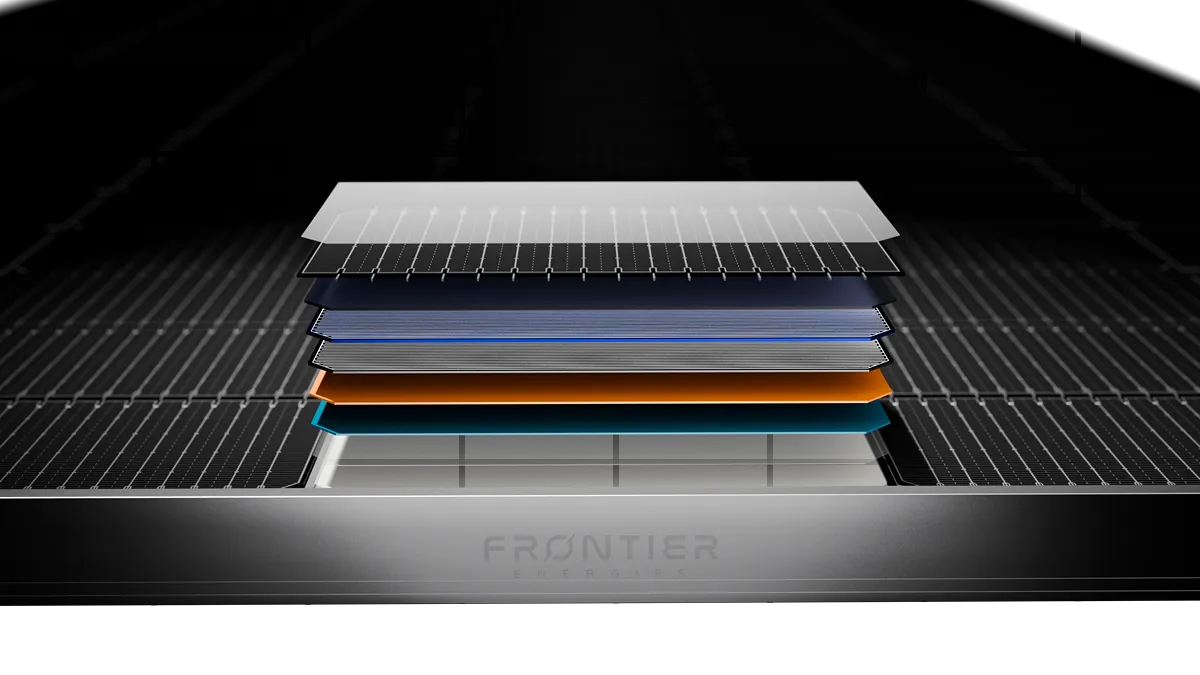
Why is Energy Independence Important for India?
India aims to achieve a renewable energy capacity of 500 GW by 2030, according to the Ministry of New and Renewable Energy (MNRE). Energy independence reduces reliance on fossil fuels, bolsters energy security, and promotes sustainable development. Rooftop solar plays a crucial role in achieving this goal, allowing households and businesses to produce their own power. With TOPCon technology, the efficiency and reliability of rooftop solar systems are significantly enhanced, making them a viable energy source.How Does TOPCon Technology Compare to Traditional Systems?
Compared to traditional PERC (Passivated Emitter and Rear Cell) technology, TOPCon panels exhibit superior performance. For example, while PERC panels typically reach efficiencies around 20-22%, our Stellar Series panels provide efficiencies of up to 23.51%. This increase translates to higher energy output and better return on investment for users. The advanced engineering of TOPCon panels also ensures longer life spans and improved durability.Steps to Transition to Rooftop Solar in India
- Evaluate your energy needs and usage patterns.
- Consult with a reliable solar provider, like Frontier Energies.
- Choose the right solar panel technology, preferably TOPCon.
- Understand financing options, including government schemes like the PM KUSUM scheme, which supports solar installations.
- Install and monitor your solar system to maximize efficiency.
“Investing in rooftop solar with advanced technology like TOPCon not only benefits the environment but also saves money in the long run.” – Solar Energy Expert
Government Initiatives Supporting Rooftop Solar
The Indian government has introduced various schemes to promote rooftop solar installations. The PM KUSUM scheme, for instance, aims to support farmers and other consumers in generating their own solar energy, thereby increasing energy independence and reducing electricity costs. This initiative aligns with India's vision of achieving 175 GW of renewable energy by 2022 and 500 GW by 2030.Conclusion
As India moves towards a more sustainable energy future, rooftop solar powered by TOPCon technology represents a significant opportunity for energy independence. At Frontier Energies, we manufacture high-quality N-Type TOPCon bifacial solar panels that can help you harness solar energy efficiently. Explore our Phoenix, Stellar, and Fornax series to find the perfect solution for your energy needs.- August 18, 2026
- Blogs
Updates Blogs & News
When Defects Become the Difference: Understanding Ring Defects in TOPCon Solar Cells
The next generation of high-efficiency solar technology is not only about improving the solar-cell architecture. It is also about understanding and controlling the microscopic defects that can limit performance.
A recent open-access study published in Communications Materials on 15 July 2026 investigates one such challenge: the formation of ring-like defects in low-oxygen Czochralski (Cz) silicon used for TOPCon solar cells. The research provides new evidence that variations in oxygen and intrinsic point defects across the silicon wafer can trigger oxygen precipitation, creating regions that appear as rings in photoluminescence imaging.
For the TOPCon industry, this is an important finding because it connects crystal growth and wafer quality directly to solar-cell performance and manufacturing yield.
Why silicon wafer quality matters in TOPCon
TOPCon, or Tunnel Oxide Passivated Contact, has become an important platform for high-efficiency crystalline-silicon solar cells.
The technology relies on carefully engineered interfaces and high-quality silicon wafers. While attention often focuses on the tunnel oxide, poly-Si contact, metallization and passivation layers, the quality of the underlying silicon wafer is equally important.
Defects already present in the wafer can become performance-limiting centres during subsequent thermal and cell-processing steps.
This is where Czochralski silicon, commonly known as Cz silicon, becomes particularly important.
Cz silicon is produced by pulling a single-crystal silicon ingot from molten silicon. During crystal growth and cooling, oxygen and intrinsic point defects can become incorporated into the material.
Controlling their concentration and distribution is therefore critical.
What are the “ring defects”?
If you look at a photoluminescence image of a silicon wafer, some wafers can show distinctive ring-like patterns, particularly toward the wafer edge.
These patterns are not simply visual anomalies.
They can indicate areas where the silicon's defect and oxygen chemistry differs from the surrounding wafer.
The new study shows that these rings are associated with regions where interstitial oxygen and intrinsic point defects are distributed non-uniformly across the wafer. In particular, the researchers found that conditions near the wafer edge can fall within a critical range that accelerates oxygen precipitation.
The result is a region with a higher density of oxygen precipitates, which appears as multiple rings in photoluminescence images.
The role of oxygen precipitation
Oxygen is naturally incorporated into Cz silicon during crystal growth.
Under certain thermal conditions, oxygen atoms can cluster and form oxygen precipitates (OPs).
Oxygen precipitation is not necessarily undesirable in every semiconductor application. However, in high-efficiency solar cells, uncontrolled precipitation can contribute to defects that affect carrier lifetime and electrical performance.
The 2026 study is particularly interesting because it shows that under low-oxygen conditions, the formation of ring defects can still occur.
The critical factor is not simply whether the wafer has “high” or “low” oxygen concentration.
Instead, the local combination of oxygen concentration and intrinsic point defects can create conditions favourable for rapid oxygen precipitation.
This is an important distinction for industrial wafer engineering.
Point defects: the hidden factor
The study focuses heavily on intrinsic point defects within silicon.
These defects include deviations from the ideal silicon crystal lattice, such as vacancies and self-interstitial-related defects.
Although they exist at extremely small scales, they can influence how oxygen behaves inside the silicon.
The researchers found evidence that when point-defect concentrations and oxygen levels fall within a particular critical range, oxygen precipitation kinetics can accelerate.
This effect is particularly important near the wafer edge, where radial variations in material properties can occur.
In other words:
A small variation in crystal chemistry → changes oxygen precipitation → creates defect-rich regions → affects solar-cell performance.
That chain is important for understanding manufacturing yield.
How did the researchers identify the mechanism?
One of the strengths of this research is that the authors did not rely on a single measurement technique.
They combined several analytical approaches, including:
- Fourier-transform infrared spectroscopy (FTIR)
- Positron annihilation lifetime spectroscopy (PALS)
- Preferential etching
- Controlled annealing experiments
- Photoluminescence imaging
Together, these methods allowed the researchers to connect the observed ring patterns with variations in oxygen and point-defect behaviour.
This combination of techniques provides experimental evidence supporting the role of point defects in ring formation under low-oxygen conditions.
Why the wafer edge is important
The study highlights an important manufacturing challenge.
A silicon wafer may appear relatively uniform when considered at a large scale, but its material properties can vary radially from the centre toward the edge.
These variations can influence:
- Oxygen concentration
- Point-defect populations
- Oxygen precipitation
- Defect density
- Carrier lifetime
- Solar-cell electrical performance
If the edge region becomes more susceptible to defect formation, the result can be a non-uniform wafer that ultimately affects downstream cell processing.
For manufacturers, this makes crystal-growth control an important part of the TOPCon efficiency equation.
From crystal growth to manufacturing yield
This is where the research becomes particularly relevant to industrial solar manufacturing.
A high-efficiency solar cell is not created in one step.
The manufacturing chain can be viewed as:
Silicon purification
↓
Crystal growth
↓
Wafer slicing
↓
Wafer cleaning and texturing
↓
TOPCon passivation and contact formation
↓
Metallization
↓
Cell testing
↓
Module manufacturing
A defect originating during crystal growth can therefore remain hidden until much later in the production process.
If those defects reduce cell performance or create non-uniformity, they can affect manufacturing yield and increase the cost of producing high-efficiency cells.
The new research provides a stronger scientific basis for tackling the problem earlier—at the crystal and wafer stage.
What can the industry learn from this research?
The study points toward several important areas for continued development.
1. Better control of crystal growth
Optimizing thermal conditions and crystal-growth parameters can help control oxygen and intrinsic point-defect distributions.
2. More detailed wafer characterization
Photoluminescence imaging and complementary material-characterization methods can help identify problematic wafers before they proceed through expensive cell-processing steps.
3. Understanding low-oxygen silicon
The research shows that reducing oxygen concentration alone does not necessarily eliminate ring defects. The interaction between oxygen and point defects must also be considered.
4. Improving manufacturing yield
Identifying the origin of ring defects provides manufacturers with another pathway to reduce defective areas and improve the consistency of high-efficiency TOPCon production.
Why this matters for TOPCon
TOPCon is already a mature industrial technology, but pushing efficiency higher requires increasingly precise control over every source of loss.
As surface passivation and contact technologies improve, bulk silicon quality becomes even more important.
Imagine improving the cell architecture to reduce recombination, only to have material defects in the wafer limit carrier lifetime.
This is why the future of TOPCon cannot be separated from advances in:
Crystal growth + wafer quality + defect engineering + passivation + contact technology
All of these components need to work together.
Connecting the research to Frontier Energies
At Frontier Energies, our focus is on high-efficiency N-type TOPCon bifacial solar modules designed for real-world commercial, industrial and utility-scale applications.
Our portfolio includes the Phoenix, Fornax and Stellar series, reflecting the industry's continued transition toward higher-power N-type TOPCon technology. Frontier Energies
Research such as this Communications Materials study is valuable to the wider TOPCon ecosystem because it demonstrates that achieving reliable high efficiency begins well before the solar cell reaches the production line.
It begins with the quality and consistency of the silicon wafer itself.
For module manufacturers, this reinforces an important principle: high-performance solar modules depend on a chain of quality extending from silicon crystal growth all the way to module assembly and field deployment.
Frontier Energies' commercial TOPCon modules represent the downstream application of this broader technology ecosystem. The research discussed here is not a Frontier Energies research result, but it provides useful insight into one of the upstream factors that can influence the performance and consistency of TOPCon cells.
The Bigger Picture: Efficiency Is Also About Consistency
The solar industry often celebrates record efficiency numbers.
But industrial photovoltaics require something more:
High efficiency must be repeatable.
A single high-performing laboratory cell is impressive. Producing millions of cells with consistently high performance is a much greater engineering challenge.
That is why defect control, wafer uniformity and manufacturing yield are becoming increasingly important as TOPCon production scales.
A reduction in defect-related losses can potentially mean:
Better wafer quality → more consistent cells → higher manufacturing yield → more reliable module production.
This is the pathway from materials science to industrial-scale solar.
Conclusion
The 2026 Communications Materials study offers an important new perspective on ring defects in low-oxygen Cz silicon used for TOPCon solar cells.
The researchers found that radial variations in interstitial oxygen and intrinsic point defects can accelerate oxygen precipitation near wafer edges, producing regions of high oxygen-precipitate density that appear as ring patterns in photoluminescence imaging.
The significance goes beyond understanding a defect pattern.
The research demonstrates how crystal-growth conditions, wafer chemistry and solar-cell performance are closely connected.
As TOPCon technology continues to move toward higher efficiency and larger-scale manufacturing, controlling these microscopic sources of variation could become increasingly important for achieving consistent performance and strong manufacturing yield.
For the solar industry, the message is clear:
The path to higher-efficiency TOPCon does not begin only at the cell. It begins with the silicon crystal.
And as companies such as Frontier Energies continue to advance high-efficiency N-type TOPCon solutions, developments in silicon materials science will remain an important part of the technology journey toward more productive and reliable solar energy.
Research Reference
Li, G., Yuan, S., Han, W. et al. “Point defect-dominated ring defect formation limiting TOPCon solar cell performance in low-oxygen Cz Silicon.” Communications Materials (2026). Published 15 July 2026. DOI: 10.1038/s43246-026-01283-x. The article is open access under a CC BY-NC-ND 4.0 licence.
- August 18, 2026
- Blogs
The race to improve crystalline-silicon solar efficiency is increasingly moving into the microscopic world of interfaces, defects and materials engineering.
A new study published in ACS Applied Materials & Interfaces on 25 May 2026 presents an interesting approach to improving the performance of Tunnel Oxide Passivated Contact (TOPCon) solar cells. The researchers developed a TOPCon structure combining an ultrathin silicon oxide layer produced using N₂O plasma oxidation with carbon-incorporated polycrystalline silicon (poly-Si).
The results demonstrate how carefully engineered materials at the silicon/contact interface can reduce recombination while maintaining the electrical properties required for efficient carrier collection.
For the solar industry, this is an important direction for the continued evolution of TOPCon technology.
Why Passivation Is Critical in TOPCon
TOPCon has become one of the leading technologies for high-efficiency crystalline-silicon photovoltaics.
The basic concept is relatively simple: an ultrathin oxide layer sits between the crystalline silicon wafer and a doped poly-Si contact. This structure helps passivate the silicon surface while enabling charge carriers to reach the electrical contact.
But achieving the right balance is challenging.
A good TOPCon contact needs to provide:
- Excellent surface passivation
- Low recombination
- Efficient carrier transport
- Low contact resistance
- Thermal stability
- Compatibility with industrial manufacturing
Improving one property can sometimes negatively affect another. The 2026 ACS study addresses this challenge by combining chemical passivation and electric-field-effect passivation through coordinated oxide and poly-Si engineering.
The Role of N₂O Plasma Oxidation
One of the key innovations in the study is the use of N₂O plasma oxidation to create the ultrathin silicon oxide layer.
According to the researchers, this process produces a uniform, continuous and amorphous SiOₓ layer.
Why is that important?
The silicon/oxide interface contains defects that can act as recombination centres. These defects can allow photogenerated carriers to disappear before they contribute to useful electrical current.
Better interface quality means fewer recombination losses.
The N₂O-plasma approach therefore focuses on improving the quality of the oxide and the interface it creates with the silicon substrate.
Carbon-Engineered Poly-Silicon: A Second Piece of the Puzzle
The second major element of the research is the introduction of carbon into the polycrystalline silicon layer.
The researchers found that carbon incorporation can influence several properties of the poly-Si layer.
According to the study, carbon:
- Suppresses excessive poly-Si crystallization
- Promotes hydrogen accumulation at the SiOₓ/silicon interface
- Reduces the poly-Si work function
- Creates favourable energy-band bending
- Contributes to improved passivation
Together, these effects strengthen both chemical passivation and field-effect passivation.
This is particularly interesting because TOPCon performance is not controlled by a single material.
The oxide and poly-Si layers need to function as an integrated system.
A Synergy Between Chemistry and Electrical Fields
One of the most important concepts in this research is the combination of two passivation mechanisms.
Chemical passivation
The silicon oxide helps reduce electrically active defects at the silicon interface.
Field-effect passivation
The electrical properties of the poly-Si contact help repel minority carriers away from the interface, reducing the probability of recombination.
When these mechanisms work together, the interface can become significantly more effective at preventing carrier losses.
This is precisely the type of engineering required as TOPCon cells move toward increasingly high efficiency.
The Numbers Behind the Research
The optimized structure demonstrated impressive passivation characteristics.
The researchers reported:
760 mV implied open-circuit voltage (iVₒc)
0.5 fA/cm² recombination current density (J₀,s)
27.9 ms effective minority-carrier lifetime
These values indicate a highly effective passivated contact structure.
Importantly, the research did not stop at laboratory characterization.
The optimized structure was also tested in mass-produced, large-area TOPCon cells, where the researchers reported an absolute efficiency improvement of 0.05%.
That industrial validation is particularly significant.
A material innovation becomes much more valuable to the PV industry when it can survive the realities of large-scale manufacturing.
Why the 0.05% Improvement Matters
At first glance, a 0.05 percentage-point absolute efficiency gain may appear small.
In large-scale solar manufacturing, however, even small improvements can have substantial value when multiplied across millions of cells and thousands of modules.
Higher cell efficiency can contribute to:
More watts per module → higher power density → potentially fewer modules for a given project capacity → optimized balance-of-system costs.
This is one reason why modern solar R&D focuses so intensely on seemingly small improvements in recombination, resistance and optical losses.
The industry is no longer looking only for dramatic changes in cell architecture.
It is increasingly looking for small, repeatable improvements that can be scaled economically.
What This Means for the Future of TOPCon
The study highlights several important directions for TOPCon development.
1. Interface engineering will become increasingly important
As cell efficiencies rise, losses at interfaces become more significant. Better control of the Si/SiOₓ/poly-Si system can therefore provide another pathway to higher performance.
2. Material combinations matter
The study demonstrates that improving the oxide alone is not necessarily enough. The properties of the adjacent poly-Si layer also influence the overall passivation behaviour.
3. Thermal stability is essential
The optimized structure showed good tolerance to variations in annealing temperature and carbon content, which is valuable for industrial processing.
4. Laboratory results must translate to manufacturing
Perhaps most importantly, the researchers demonstrated an efficiency improvement in mass-produced large-area cells, connecting the material innovation to industrial applicability.
Connecting the Research to Frontier Energies
At Frontier Energies, our focus is on advanced N-type TOPCon solar technology and high-performance bifacial modules designed for real-world applications.
Our current portfolio includes the Phoenix, Fornax and Stellar series, covering commercial, industrial and utility-scale applications.
Frontier Energies' Phoenix Series, for example, uses N-type TOPCon bifacial technology and offers power ratings from 615–645 Wp, with module efficiency up to 23.07%. The series is positioned for utility-scale and large commercial projects where power density is important.
The Fornax Series provides 565–600 Wp TOPCon bifacial dual-glass modules, with efficiency up to 23.23%, targeting commercial and industrial applications.
The Stellar Series uses N-type TOPCon bifacial technology with G12R cells and reaches up to 635 Wp and 23.51% module efficiency, according to Frontier Energies' current specifications.
It is important to distinguish these commercial module specifications from the laboratory and cell-level metrics reported in the ACS research. The research focuses on the underlying TOPCon cell structure, while Frontier Energies' figures describe complete commercial modules.
From Materials Science to Megawatts
Research such as this illustrates how the next generation of solar efficiency may be achieved.
The future is unlikely to depend on one single breakthrough.
Instead, progress will come from optimizing multiple components simultaneously:
Better silicon surfaces
↓
Better oxide layers
↓
Better poly-Si contacts
↓
Lower recombination
↓
Better carrier collection
↓
Higher-efficiency solar cells
↓
Higher-power solar modules
The challenge is to achieve these improvements while keeping manufacturing scalable, reliable and cost-effective.
That is where industrial validation becomes so important.
The Bigger Picture for India's Solar Future
India's solar industry is moving toward higher-power modules, greater efficiency and increased domestic manufacturing capability.
As module technologies evolve, advanced N-type TOPCon architectures are becoming increasingly important for delivering higher energy output from available land and infrastructure.
Frontier Energies states that its mission is to accelerate the transition toward sustainable energy through advanced solar manufacturing and energy infrastructure, with a focus on innovation, scale and long-term performance.
Research into advanced TOPCon passivation supports the broader technological ecosystem behind this transition.
The work may look microscopic—an ultrathin oxide layer, carbon atoms within poly-Si and the behaviour of carriers at an interface.
But the potential impact is measured at a much larger scale.
From nanometres at the silicon interface to gigawatts of solar generation.
Conclusion
The 2026 ACS Applied Materials & Interfaces study demonstrates a compelling approach to improving TOPCon solar-cell passivation by combining N₂O-plasma-grown SiOₓ with carbon-incorporated poly-Si.
The optimized structure achieved an iVₒc of 760 mV, J₀,s of 0.5 fA/cm² and a 27.9 ms minority-carrier lifetime, while industrial validation delivered a 0.05% absolute efficiency gain in mass-produced large-area TOPCon cells.
The key message is clear:
The next gains in solar efficiency may come from controlling the smallest details of the cell.
For TOPCon, the silicon/oxide/poly-Si interface remains one of the most important areas for innovation.
As research continues to improve these interfaces, the pathway toward more efficient, reliable and scalable solar technology becomes increasingly promising.
For companies such as Frontier Energies, these developments reinforce the importance of advanced TOPCon technology as part of India's journey toward a higher-efficiency, more self-reliant and sustainable energy future.
Research Reference
Zunke Liu et al., “Nitrous Oxide-Plasma Silicon Oxide Coupled with Carbon-Incorporated Polycrystalline Silicon Enables Highly Passivated TOPCon Solar Cells,” ACS Applied Materials & Interfaces, 2026, 18(22), 31530–31541. DOI: 10.1021/acsami.6c06122.
- August 18, 2026
- Blogs
The Future of Floating Solar: Harnessing India’s Water Bodies
The Future of Floating Solar: An Introduction
What is Floating Solar?
Floating solar refers to solar panels installed on water bodies, helping to harness solar energy while minimizing land use. These systems provide numerous benefits such as reduced evaporation, enhanced panel efficiency due to cooling effects, and minimal ecological disruption. At Frontier Energies, we have found that floating solar can significantly contribute to India's renewable energy goals.Why TOPCon Technology is a Game-Changer for Floating Solar?
TOPCon (Tunnel Oxide Passivated Contact) technology enhances solar panel efficiency significantly compared to traditional PERC (Passivated Emitter Rear Cell) panels. For instance, while PERC panels typically offer efficiency up to 22%, TOPCon panels can deliver up to 23.51% efficiency, as seen in our Stellar Series. This means more energy generation from the same area, crucial for floating installations where space is limited.“The integration of TOPCon technology in floating solar solutions can lead to unprecedented efficiency and energy generation, positioning India as a leader in renewable energy.”
Current Trends and Government Initiatives
The Indian government has set a target of achieving 300 GW of solar capacity by 2022, with a significant emphasis on sustainable solutions like floating solar. Programs such as the “National Solar Mission” provide support for projects that innovate in the renewable sector. As per the Ministry of New and Renewable Energy (MNRE), floating solar projects are expected to harness over 10,000 MW from India's water bodies.Benefits of Floating Solar in India
- Space Efficiency: Floating solar panels require less land, making them ideal for densely populated regions.
- Environmental Impact: These systems can reduce water evaporation and improve water quality.
- Energy Production: Enhanced cooling effects lead to higher energy yields, maximizing ROI.
- Job Creation: The development and maintenance of these projects will create numerous jobs in the renewable sector.
How to Implement Floating Solar Projects?
- Assess suitable water bodies for floating solar installations.
- Engage with stakeholders including local governments and environmental agencies.
- Utilize advanced technologies like TOPCon for optimal efficiency.
- Secure financing through government schemes and private investments.
- Monitor and maintain the installations for long-term performance.
Conclusion: Embrace the Future with Frontier Energies
As India looks to harness its natural resources for sustainable energy, floating solar technology presents an exciting opportunity. With our state-of-the-art TOPCon bifacial solar panels, including the Phoenix, Stellar, and Fornax series, Frontier Energies is poised to lead the way in this innovative energy solution. Together, we can transform India's water bodies into powerful sources of renewable energy, ensuring a greener future for generations to come.- August 18, 2026
- Blogs
The Future of Rooftop Solar in India: Opportunities and Growth for Dealers
The Future of Rooftop Solar in India: Opportunities and Growth for Dealers
Why Rooftop Solar is Key to India's Energy Future
What Are the Key Opportunities for Dealers in 2026?
Dealers can benefit from various opportunities as the market for rooftop solar in India expands:- Government Incentives: The Indian government offers various subsidies and tax benefits to encourage rooftop solar adoption.
- Increasing Awareness: With more consumers recognizing the benefits of solar energy, demand for rooftop installations is set to rise.
- Technological Advancements: Innovations in solar technology, such as N-Type TOPCon bifacial panels, improve efficiency and appeal to customers.
- Partnership Opportunities: Collaborations with established solar manufacturers can provide dealers with a competitive edge.
How to Prepare for the Growth in Rooftop Solar?
To maximize potential growth, dealers should consider the following steps:- Invest in Training: Equip your team with knowledge about the latest solar technologies and market trends.
- Build Relationships: Establish connections with solar manufacturers like Frontier Energies for high-quality products.
- Understand the Market: Stay updated on government policies and consumer preferences to tailor your offerings accordingly.
What Government Schemes Support Rooftop Solar Growth?
One notable government initiative is the Grid Connected Rooftop Solar Scheme, which aims to promote solar installations on residential and commercial rooftops. Under this scheme, financial incentives are provided, making solar energy more accessible and affordable for consumers.Conclusion
The prospects for rooftop solar in India are promising, and dealers stand to gain immensely from this growth. As the market expands, Frontier Energies provides high-quality N-Type TOPCon bifacial solar panels, including our Phoenix, Stellar, and Fornax series. By leveraging the opportunities presented, dealers can thrive in this evolving landscape."The rooftop solar market in India is not just a trend; it's a necessity for sustainable growth. Dealers must prepare now to seize the future." - Industry Expert
- August 18, 2026
- Blogs
The Future of Solar Power in India: How TOPCon Enhances Efficiency
The Future of Solar Power in India: Enhancing Efficiency with TOPCon
As India strives towards its renewable energy targets, solar power has emerged as a cornerstone of its energy strategy. With the government's ambitious goal of achieving 280 GW of solar capacity by 2030, the adoption of innovative technologies like TOPCon technology is crucial. In this blog, we’ll explore how TOPCon enhances solar panel efficiency and sustainability, and what it means for India’s future energy landscape.What is TOPCon Technology?
TOPCon solar panels are a revolutionary advancement in photovoltaic technology. They utilize a tunnel-oxide passivated contact design that significantly reduces electron recombination, leading to higher energy conversion efficiency. This technology contrasts with traditional PERC panels, which typically achieve efficiencies around 21-22%. In comparison, TOPCon panels can reach efficiencies above 23%, offering better performance in both standard and low-light conditions.“The transition to advanced solar technologies like TOPCon is vital for meeting India's energy demands sustainably,” says an industry expert.
How Does TOPCon Technology Improve Efficiency?
TOPCon technology enhances efficiency by effectively managing how sunlight interacts with solar cells. By minimizing energy losses, it allows solar panels to generate more power from the same amount of sunlight. For instance, Frontier Energies' Phoenix Series offers up to 645Wp with a remarkable efficiency of 23.07%, while the Stellar Series achieves 23.51%. This means more energy production per square meter, crucial for optimizing solar installations across India.Benefits of TOPCon Technology for Sustainability
1. **Higher Energy Yield**: The increased efficiency of TOPCon panels leads to a significantly higher energy yield, reducing the land footprint required for solar farms. 2. **Longer Lifespan**: These panels are designed to last longer, contributing to a lower environmental impact over their operational lifetime. 3. **Reduced Carbon Footprint**: By generating more electricity with less space and materials, TOPCon technology helps in reducing the overall carbon footprint associated with solar energy production.Government Support and Market Trends
The Indian government has introduced several initiatives to promote solar energy, including the Solar Rooftop Scheme, which offers financial incentives for residential and commercial installations. With a target of installing 40 GW of rooftop solar by 2022, the push for solar energy is stronger than ever. According to the Ministry of New and Renewable Energy (MNRE), solar power accounted for about 45 GW of the total renewable energy capacity in India as of 2023.Is TOPCon Technology Worth the Investment?
Yes, investing in TOPCon technology is worthwhile. With the current trajectory of solar technology advancements, the ROI for TOPCon panels is increasingly favorable. Homeowners and businesses can expect lower electricity bills and greater energy independence. Additionally, with government subsidies and incentives, initial investment costs are becoming more manageable.Conclusion
At Frontier Energies, we have found that the future of solar power in India is bright, especially with the adoption of TOPCon technology. Our range of solar panels, including the Fornax Series, ensures you have access to the latest in solar efficiency. Embrace the future of energy with us.- August 18, 2026
- Blogs
The Future of Solar Energy in India: How TOPCon Technology is Driving Sustainable Growth
The Future of Solar Energy in India: How TOPCon Technology is Driving Sustainable Growth
At Frontier Energies, we have found that the future of solar energy in India is bright, thanks to advancements like TOPCon technology. With the government's ambitious target of achieving 450 GW of renewable energy capacity by 2030, the solar sector is poised for unprecedented growth. In this blog, we'll explore how TOPCon technology is revolutionizing solar energy, its efficiency benefits, and what it means for India's sustainable future.What is TOPCon Technology?
TOPCon solar panels are a cutting-edge solar technology that enhances the efficiency and performance of solar cells. By utilizing tunnel oxide passivated contact technology, TOPCon panels achieve higher energy conversion rates compared to traditional PERC (Passivated Emitter and Rear Cell) panels. For instance, while PERC panels typically offer up to 22% efficiency, TOPCon panels in our Phoenix Series reach up to 23.07%. This advancement translates to more energy production from the same surface area, making TOPCon a game-changer in the solar industry.How is TOPCon Technology Driving Sustainable Growth?
TOPCon technology is driving sustainable growth in several key ways:- Higher Efficiency: With efficiencies exceeding 23%, TOPCon panels produce more power, reducing the land and material required for solar farms.
- Longer Lifespan: The design of TOPCon panels allows for better heat tolerance and degradation resistance, ensuring longevity and better returns on investment.
- Lower Carbon Footprint: Increased efficiency means less energy is needed for manufacturing and installation, minimizing the overall carbon footprint associated with solar energy.
What Are the Benefits of Choosing TOPCon Panels?
Investing in TOPCon solar panels offers numerous benefits for both residential and commercial users:- Cost Savings: Higher efficiency leads to lower energy bills and quicker ROI.
- ALMM Approval: Our TOPCon panels are ALMM approved, ensuring compliance with government standards.
- BIS Certification: The panels are also BIS certified, providing assurance of quality and reliability.
What is the Current State of Solar Energy in India?
“India's solar energy capacity crossed 60 GW in 2021, with a goal to reach 100 GW by 2022, showcasing the rapid growth in the sector.”The Indian solar market has witnessed exponential growth, with the Ministry of New and Renewable Energy (MNRE) reporting an increase in solar capacity from merely 2.6 GW in 2014 to over 60 GW in 2021. Such growth is indicative of the increasing reliance on solar energy to meet the country's energy demands and commitments to reduce carbon emissions.
How Does TOPCon Compare to Other Solar Technologies?
When comparing TOPCon technology to traditional PERC, the differences are substantial:TOPCon vs PERC: A Technical Comparison
| Technology | Efficiency | Cost |
|---|---|---|
| TOPCon | 23.07% - 23.51% | Higher upfront cost, better long-term ROI |
| PERC | Up to 22% | Lower upfront cost, moderate ROI |
Conclusion: The Path Forward with Frontier Energies
As India moves towards a sustainable future, the adoption of technologies like TOPCon will be crucial. At Frontier Energies, we are proud to offer high-efficiency solar panels that meet the highest standards of quality and performance. Our Phoenix, Stellar, and Fornax series of TOPCon panels are designed to deliver optimal energy production and sustainability. Join us in embracing the future of solar energy in India.- August 18, 2026
- Blogs
Why the latest TOPCon breakthrough matters for the solar industry
The Next Leap in TOPCon Solar: What 26.66% Efficiency Means for the Future of High-Performance PVSolar technology is entering a phase where incremental improvements are becoming increasingly important. As crystalline silicon continues to dominate the photovoltaic industry, the focus is shifting from simply producing more powerful solar modules to extracting more electrical performance from every wafer, every contact and every square metre of installed area.
A new study published in Nature Energy in February 2026 highlights exactly this direction.
In the paper “Dual-side electrical refinement enables efficient industrial tunnel oxide passivating contact silicon solar cells,” researchers demonstrated a certified 26.66% power-conversion efficiency on an industrial-scale M10-size TOPCon solar cell. Rather than relying on a single breakthrough, the work combines several improvements on both the front and rear sides of the cell.
For the solar industry, the significance is broader than the headline efficiency number. The research demonstrates how careful engineering of passivation, carrier transport, metallization and bifacial performance can collectively move industrial TOPCon technology closer to its fundamental efficiency limits.
For companies such as Frontier Energies, which is building its product portfolio around high-efficiency N-type TOPCon bifacial modules, developments like these offer an important view of where photovoltaic technology is heading.
TOPCon: From emerging technology to mainstream PV platform
TOPCon — Tunnel Oxide Passivated Contact — has become one of the most important technological developments in crystalline-silicon photovoltaics.
At its core, TOPCon uses an ultra-thin tunnel oxide and a doped polysilicon layer to create a passivated electrical contact. The structure is designed to allow charge carriers to be collected efficiently while suppressing unwanted recombination at the silicon surface.
That combination is important because solar-cell efficiency is ultimately a balance between generating carriers, transporting them and preventing them from being lost.
The 2026 Nature Energy research illustrates this principle particularly well: the researchers did not treat the front and rear sides of the cell as isolated components. Instead, they developed a dual-sided electrical refinement strategy, improving multiple loss mechanisms simultaneously.
This is an important lesson for the next stage of TOPCon development.
The future is not only about higher cell efficiency in laboratory conditions. It is about translating sophisticated cell physics into large-area, manufacturable and reliable technologies.
What did the 2026 research achieve?
The research team reported a certified 26.66% efficiency for an industrial-scale TOPCon cell fabricated on an M10-size wafer. The paper identifies several key technology improvements.
1. Improving the front-side boron emitter
The researchers introduced a high-sheet-resistance boron emitter on the front side.
The objective was to improve surface passivation while maintaining effective carrier collection. Better passivation reduces recombination losses, allowing a greater proportion of photogenerated carriers to contribute to useful electrical output.
This demonstrates an increasingly important principle in TOPCon manufacturing: emitter design is not simply about creating a conductive region. It must simultaneously satisfy the requirements of passivation, conductivity and metallization.
2. Optimizing the front grid
The research also optimized the front metallization grid to reduce carrier-transport losses.
This is a classic solar-cell engineering trade-off.
A larger amount of metal can reduce resistive losses, but excessive metallization can shade the cell and reduce the amount of sunlight reaching the active silicon. Conversely, reducing metal coverage can increase optical utilization but may increase electrical resistance.
The research demonstrates that high-efficiency TOPCon requires optimization across these competing effects rather than maximizing a single parameter.
3. Engineering the rear contact
One of the most interesting elements of the study is the double-layer tunnel oxide/silicon-polysilicon structure on the rear side.
According to the researchers, the structure helps suppress silver-induced degradation by limiting silver diffusion from the electrode toward the silicon substrate while maintaining strong interfacial passivation.
This is particularly relevant to industrial PV because a solar cell is not judged solely by its initial efficiency.
A commercially valuable cell must retain its performance over years of operation.
Therefore, contact architecture, metallization compatibility and degradation mechanisms are becoming just as important as peak efficiency.
Bifaciality: efficiency is only part of the equation
The paper also reports 88.3% bifaciality after localized thinning of the rear polysilicon layer.
This is significant because modern solar modules increasingly operate as bifacial energy generators.
Instead of considering only the power generated from direct front-side illumination, bifacial systems can capture reflected and diffuse light from the rear.
This changes how we should think about solar performance.
A module with a slightly lower front-side efficiency can potentially produce more energy over its lifetime if its bifacial response, temperature behaviour, degradation characteristics and installation environment are favourable.
The industry is therefore moving from a narrow focus on nameplate efficiency toward a broader focus on energy yield.
What does this mean for module manufacturers?
The research provides an important glimpse into the direction of the PV industry.
The next generation of high-performance modules will increasingly depend on the interaction between:
- Cell architecture
- Surface passivation
- Contact engineering
- Metallization
- Bifacial response
- Temperature performance
- Degradation behaviour
- Manufacturing consistency
- Module-level reliability
In other words, the path to better solar modules begins well before the module reaches the installation site.
It begins at the cell.
Connecting the research to Frontier Energies
At Frontier Energies, our focus is on bringing high-efficiency solar technology into practical, scalable module applications.
Frontier Energies currently offers N-type TOPCon bifacial modules across its Phoenix, Fornax and Stellar series, with products designed for commercial, industrial and utility-scale applications.
This makes the broader direction highlighted by the 2026 Nature Energy study particularly relevant.
The research demonstrates that improvements in TOPCon are increasingly coming from detailed optimization of the entire electrical architecture. Frontier Energies' role is to translate the advantages of advanced N-type TOPCon technology into modules designed for real-world energy generation.
Our Phoenix series, for example, offers power classes from 615 Wp to 645 Wp, using N-type TOPCon bifacial technology and 156 cells, with module efficiency reaching up to 23.07% according to Frontier Energies' current product specifications.
The Stellar series extends this approach with N-type TOPCon bifacial technology, G12R cell architecture and dual-glass construction, with power output up to 635 Wp and module efficiency up to 23.51%.
For commercial and industrial applications, the Fornax series provides TOPCon bifacial dual-glass modules in the 565–600 Wp range, with efficiency up to 23.23%.
These are module-level specifications, while the 26.66% figure reported in the Nature Energy paper is a certified solar-cell efficiency. The two figures should therefore not be compared directly as equivalent metrics.
From cell efficiency to project economics
Why does cell-level innovation matter to a module manufacturer and, ultimately, to a project developer?
Because every improvement in cell performance has the potential to influence the economics of the complete photovoltaic system.
Higher-performing cells can contribute to:
More power per module → fewer modules for a given DC capacity → optimized land and balance-of-system requirements → potentially lower project-level costs.
For large utility-scale installations, these effects can become substantial.
Frontier Energies' high-power TOPCon portfolio is designed with this broader objective in mind. The Phoenix series, for example, is positioned for utility-scale and large commercial installations where power density and energy yield are critical considerations.
The importance of reliability alongside efficiency
The 2026 research also reinforces another important message: efficiency alone is not enough.
The researchers specifically addressed silver-induced degradation through their rear contact architecture.
This highlights a fundamental challenge for the solar industry.
A module installed today may be expected to generate electricity for decades. Therefore, the engineering challenge is not simply:
“How efficient can we make a solar cell?”
It is:
“How efficiently can we make a solar cell while maintaining performance, reliability and manufacturability over its operating lifetime?”
That distinction will become increasingly important as TOPCon moves further into large-scale deployment.
Frontier Energies similarly emphasizes long-term performance in its TOPCon module portfolio. Its Phoenix and Stellar products, for example, are specified with 15-year product warranties and 30-year performance warranties.
Where is TOPCon heading next?
The 26.66% result should not be viewed as the end point for TOPCon.
Instead, it is evidence that the technology still has room for improvement.
Future development is likely to focus on several interconnected areas:
Better passivation
Reducing recombination at silicon/contact interfaces remains one of the most important routes toward higher voltage and efficiency.
Lower contact resistance
As cells become more efficient, electrical losses that were previously small become increasingly important.
Improved metallization
Reducing silver consumption, preventing degradation and improving contact quality will remain major industrial priorities.
Higher bifacial performance
As bifacial deployment expands, rear-side optical and electrical design will become increasingly important.
Better manufacturing uniformity
A record laboratory cell is valuable, but industrial success depends on reproducing performance consistently across millions of wafers.
Integration with tandem technologies
TOPCon is also increasingly being investigated as the silicon bottom cell for perovskite/silicon tandem architectures. Recent 2026 research has already demonstrated certified tandem efficiencies above 32%, illustrating the potential for TOPCon to remain relevant beyond conventional single-junction silicon.
From scientific breakthroughs to scalable solar power
The most important takeaway from the Nature Energy paper is not simply the number 26.66%.
It is the engineering philosophy behind the result.
High-efficiency solar technology is increasingly being created through the simultaneous optimization of multiple small losses — from surface recombination and carrier transport to contact resistance, metallization-induced degradation and bifacial response.
That is the direction in which the solar industry is moving.
And it is a direction that aligns strongly with the broader mission of Frontier Energies: advancing high-efficiency solar manufacturing and energy infrastructure through scientific precision, operational excellence and scale. Frontier Energies states that its mission is to accelerate the transition to sustainable energy while developing high-efficiency solar technologies and infrastructure.
The next generation of photovoltaics will not be defined by one breakthrough alone.
It will be defined by how effectively the industry converts breakthroughs in materials science, cell physics and manufacturing engineering into reliable megawatts in the field.
TOPCon is already proving that this transition is possible.
And as research continues to push the boundaries of silicon-cell efficiency, companies such as Frontier Energies have an important role to play in turning advanced cell technology into practical, high-yielding solar power systems for India's rapidly expanding clean-energy economy.
Research reference
Yang, Z., Chen, S., Mao, J. et al. “Dual-side electrical refinement enables efficient industrial tunnel oxide passivating contact silicon solar cells.” Nature Energy 11, 699–709 (2026). Published 24 February 2026. DOI: 10.1038/s41560-026-01982-2.- August 14, 2026
- Blogs
The Future of Rooftop Solar in India: Maximizing Energy Independence
The Future of Rooftop Solar in India: Maximizing Energy Independence
The future of rooftop solar in India is bright, especially with the emergence of innovative technologies like TOPCon (Tunnel Oxide Passivated Contact) solar panels. At Frontier Energies, we have found that these advanced panels not only enhance energy efficiency but also significantly contribute to energy independence for residential and commercial users alike. In this blog, you'll learn about the benefits of TOPCon technology, its role in India's renewable energy landscape, and how it can help you achieve energy autonomy.What are TOPCon Solar Panels?
Why is Energy Independence Important for India?
India aims to achieve a renewable energy capacity of 500 GW by 2030, according to the Ministry of New and Renewable Energy (MNRE). Energy independence reduces reliance on fossil fuels, bolsters energy security, and promotes sustainable development. Rooftop solar plays a crucial role in achieving this goal, allowing households and businesses to produce their own power. With TOPCon technology, the efficiency and reliability of rooftop solar systems are significantly enhanced, making them a viable energy source.How Does TOPCon Technology Compare to Traditional Systems?
Compared to traditional PERC (Passivated Emitter and Rear Cell) technology, TOPCon panels exhibit superior performance. For example, while PERC panels typically reach efficiencies around 20-22%, our Stellar Series panels provide efficiencies of up to 23.51%. This increase translates to higher energy output and better return on investment for users. The advanced engineering of TOPCon panels also ensures longer life spans and improved durability.Steps to Transition to Rooftop Solar in India
- Evaluate your energy needs and usage patterns.
- Consult with a reliable solar provider, like Frontier Energies.
- Choose the right solar panel technology, preferably TOPCon.
- Understand financing options, including government schemes like the PM KUSUM scheme, which supports solar installations.
- Install and monitor your solar system to maximize efficiency.
“Investing in rooftop solar with advanced technology like TOPCon not only benefits the environment but also saves money in the long run.” – Solar Energy Expert
Government Initiatives Supporting Rooftop Solar
The Indian government has introduced various schemes to promote rooftop solar installations. The PM KUSUM scheme, for instance, aims to support farmers and other consumers in generating their own solar energy, thereby increasing energy independence and reducing electricity costs. This initiative aligns with India's vision of achieving 175 GW of renewable energy by 2022 and 500 GW by 2030.Conclusion
As India moves towards a more sustainable energy future, rooftop solar powered by TOPCon technology represents a significant opportunity for energy independence. At Frontier Energies, we manufacture high-quality N-Type TOPCon bifacial solar panels that can help you harness solar energy efficiently. Explore our Phoenix, Stellar, and Fornax series to find the perfect solution for your energy needs.- August 18, 2026
- Blogs
Updates Blogs & News
-
When Defects Become the Difference: Understanding Ring Defects in TOPCon Solar Cells
- August 18, 2026
- Blogs
-
Advancing TOPCon Solar: How N₂O Plasma and Carbon-Engineered Poly-Silicon Could Unlock Higher Passivation
- August 18, 2026
- Blogs
-
The Future of Floating Solar: Harnessing India’s Water Bodies
- August 18, 2026
- Blogs
-
The Future of Rooftop Solar in India: Opportunities and Growth for Dealers
- August 18, 2026
- Blogs
-
The Future of Solar Power in India: How TOPCon Enhances Efficiency
- August 18, 2026
- Blogs
-
The Future of Solar Energy in India: How TOPCon Technology is Driving Sustainable Growth
- August 18, 2026
- Blogs
-
Why the latest TOPCon breakthrough matters for the solar industry
- August 14, 2026
- Blogs
-
The Future of Rooftop Solar in India: Maximizing Energy Independence
- August 18, 2026
- Blogs
